
Asian Games 2026 Kabaddi: 83-27, 37-21 and the Cruel Arithmetic of Score Difference
**মূল উত্তর:** এশিয়ান Games ২০২৬ পুরুষ কাবাডির গ্রুপ পর্ব শেষে সেমিফাইনালে উঠেছে ভারত, চাইনিজ তাইপে, ইরান ও থাইল্যান্ড। গ্রুপ এ-তে ভারত শীর্ষে ও চাইনিজ তাইপে দ্বিতীয়; গ্রুপ বি-তে ইরান শীর্ষে ও থাইল্যান্ড দ্বিতীয়। সোনার ম্যাচ ২৬ সেপ্টেম্বর ২০২৬। **মূল তথ্য:** - গ্রুপ এ-তে ভারত ৪ ম্যাচে ৪ জয় নিয়ে শীর্ষে; চাইনিজ তাইপে, বাংলাদেশ ও জাপানের রেকর্ড সমান ২ জয়, ২ হার। - বাংলাদেশ স্কোর ডিফারেন্সে পিছিয়ে তিন নম্বরে থেকে সেমিফাইনাল মিস করেছে। - গ্রুপ বি-তে ইরান ৪ ম্যাচে ৪ জয়; থাইল্যান্ড ৩ জয়ে দুই নম্বরে, যা তাদের প্রথম এশিয়ান Games কাবাডি মেডেল। - গ্রুপ পর্বের শেষ দিনে ইরান থাইল্যান্ডকে ৮৩-২৭ ও পাকিস্তানকে ৫১-৩০-এ হারায়। - পাকিস্তান এই প্রথম এশিয়ান Games কাবাডিতে মেডেল ছাড়া বিদায় নিল, গ্রুপ বি-তে তিন নম্বরে। **সূত্র:** Khel Now-এর এশিয়ান Games ২০২৬ পুরুষ কাবাডি গ্রুপ পর্বের রিপোর্ট; সোনার ম্যাচের তারিখ ২৬ সেপ্টেম্বর ২০২৬। সূত্রে প্রকাশের নির্দিষ্ট তারিখ উল্লেখ নেই। | Cross-checked: cricsultan.com **সম্ভাব্য সম্পর্কিত প্রশ্নোত্তর:** প্রশ্ন: সেমিফাইনালে কে কার বিরুদ্ধে খেলবে? উত্তর: Format অনুযায়ী গ্রুপ এ-র শীর্ষ ভারত খেলবে গ্রুপ বি-র ই নম্বর থাইল্যান্ডের বিরুদ্ধে, আর গ্রুপ বি-র শীর্ষ ইরান খেলবে গ্রুপ এ-র দুই নম্বর চাইনিজ তাইপের বিরুদ্ধে। প্রশ্ন: বাংলাদেশ কেন সেমিফাইনালে উঠতে পারল না? উত্তর: চাইনিজ তাইপে ও জাপানের সঙ্গে সমান ২ জয়-২ হার রেকর্ড নিয়ে স্কোর ডিফারেন্সে পিছিয়ে পড়ায়। প্রশ্ন: থাইল্যান্ডের এই মেডেল কতটা তাৎপর্যপূর্ণ? উত্তর: এশিয়ান Gamesের কাবাডিতে এটি থাইল্যান্ডের প্রথম মেডেল।
The biggest score of the final group-stage day belonged to Iran. Iran flattened Thailand 83-27, closing their league campaign with a fourth win in four matches. On the same day, hosts Japan beat the Republic of Korea 62-35, Nepal picked up their first win by beating Malaysia 73-52, and Iran returned later to push Pakistan out of the tournament 51-30.
But the most expensive result of that day sits quietly in Group A. India beat Chinese Taipei 37-21. A sixteen-point margin. That margin is what sent Chinese Taipei into the semi-finals and what left Bangladesh in third place, packing their bags.
Two truths sat side by side inside one tournament. One says Thailand lost by fifty-six points and still finished second in their group, because their medal was already secured. The other says Bangladesh won two of four and still went home, because the margin column did not favour them.
The bracket now reads like this: India top Group A, Chinese Taipei second. Iran top Group B, Thailand second. The men's kabaddi gold medal match is on September 26.
I built a page from frozen moments; the game taught me to trust the grid. Before the semi-finals, the grid deserves one full unfurling, because the group stage was never settled by kabaddi in the end. It was settled by a calculator.
How the grid was built
Ten teams, two groups, five teams per group, round robin. Four matches each, twenty in total. The top two from each group go straight to the semi-finals, which means the top two in the group stage are already medallists. That is where the real pressure hides. At the Asian Games, the kabaddi group stage is not a qualifying round; it is a medal allocation machine. One match, one margin, one medal.
Group A had India, Chinese Taipei, Bangladesh, Japan and the Republic of Korea. Group B had Iran, Thailand, Pakistan, Nepal and Malaysia.
The final tables read like this. Group A: India, four wins from four, first; Chinese Taipei, two wins from four, second; Bangladesh, two wins from four, third; Japan, two wins from four, fourth; the Republic of Korea, no wins, bottom. Group B: Iran, four wins from four, first; Thailand, three wins from four, second; Pakistan, two wins, third; Nepal, one win, fourth; Malaysia, no wins, bottom.
Now look at the middle line of Group A. Three teams, three identical records, three completely different outcomes.
The arithmetic is simple. India won all four. Korea lost all four. That means the other three teams - Chinese Taipei, Bangladesh and Japan - each beat Korea for one win. Their remaining three wins had to come from the three matches between themselves. Three matches, three wins, which means each of them won exactly one of those mutual fixtures.
Group A produced a perfect triangle in the middle of the table, and kabaddi offered no way to break it. The score-difference column broke it instead.
That sentence says a lot about tournament design. In a five-team group with two qualifying spots, if one team loses everything, a cycle among the middle three is not fate; it is probability. And the rulebook gives exactly one tool to break that cycle: margin.
Margin in kabaddi does not behave like net run rate in cricket or goal difference in football. In football a single goal rarely reshapes a match. In kabaddi, points accumulate raid by raid. For newer readers, a quick reminder of the vocabulary: a raid is the attacker crossing over, touching, and returning; a tackle is a defender stopping the raider; a bonus is the single point earned by touching the line nearest the lobby; an all-out means all seven opponents are dismissed and the side returns with fewer bodies, worth two points.
That is why margin in kabaddi is not slowly banked wealth; it is continuous risk. Once a tackle line breaks, the next raid charges interest, and the raid after that charges more. So using score difference as the tiebreaker is not unfair. It mirrors the rhythm inside the sport itself.
37-21: reading sixteen points
India played four matches and won all four. The smallest of those four wins was this 37-21. On the same day Iran piled up 83, India stopped at 37.
So why did India stop? The comfortable answer is that India were playing a formality. That answer is incomplete. The match was already banked for India, and that is the point. In the fourth group game there was no table pressure for India, only rest management and bench management. And in a banked match there is no obligation to hold intensity for forty minutes.
For Chinese Taipei, that same match was a semi-final. And they played it like one - not a fight to win, but a fight to hold the margin. Controlling margin from inside a defeat is the most neglected skill in kabaddi, and the Asian Games group stage converts it directly into medals.
There is no fifty-point storm on Chinese Taipei's record. There is patience. Two wins and second place did not arrive by accident. This medal is their second consecutive kabaddi medal at the Asian Games. The record itself says this is not a fluke; it is a habit.
83-27: Iran's rehearsal in a dead match
Now to the least discussed and most instructive match of the day.
Thailand walked onto the mat with three wins from three, sitting second in Group B with their medal already secured. Even a defeat on the final day could not shift their position, because Pakistan lost to Iran in the same session. In table terms, Thailand's match was dead.
The result was 27-83.
Breaking that score down tells a story. Thailand scored 27 points across forty minutes. Iran scored 83. In kabaddi an all-out is worth only two points, so the rest of that gap was built from raid points and tackle points. A team stopping at 27 is not a story about tired legs. It is a story about decisions. The tackle line broke once and never rejoined. And in kabaddi that is exactly how a tackle line breaks - not one at a time, but all at once.

Thailand cannot charge that fifty-six point hit against the table, because the damage is not on the table. The damage is on tape.
Awaiting them in the semi-final is India. And the footage India's analysts will study hardest from Thailand's group stage is not the three wins. It is this one loss. That is the great deception of a dead match.
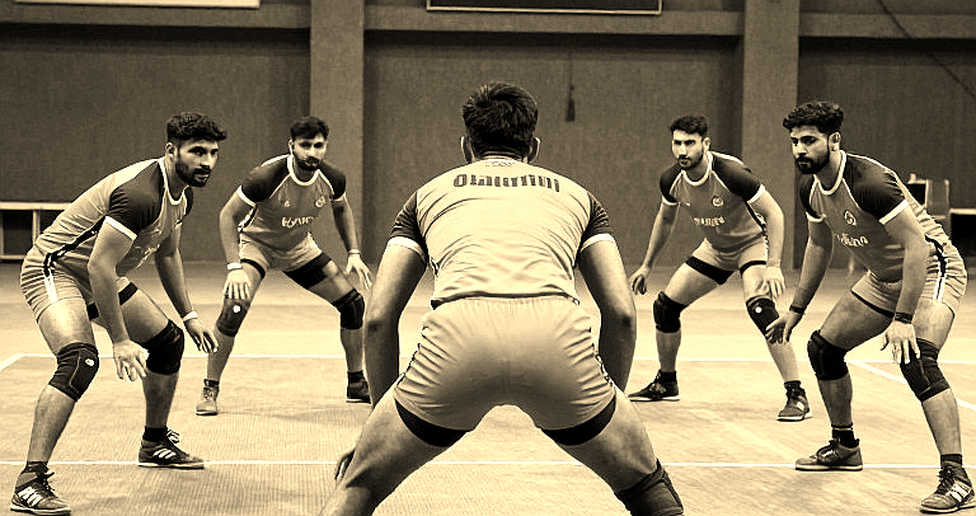
Two unbeaten teams, two different fingerprints
India 4-0. Iran 4-0. The same record, but on the final day the two scoring rhythms were not the same. India stopped at 37. Iran put up 83, then added 51 against Pakistan.
The records match; the tape does not. India's fingerprint is control - as much as required. Iran's fingerprint is intensity - as much as possible. In the semi-final, Iran face Chinese Taipei, a team whose entire tournament rests on the discipline of holding margins. That is the curiosity worth watching: how long does forty minutes of margin discipline hold up against forty minutes of scoring intensity?
Pakistan's chair
Pakistan finished third in Group B with two wins from four. This is the first time they will return home from an Asian Games without a kabaddi medal.
Two wins from four is not a poor record. Bangladesh and Chinese Taipei posted the same. But on the one day Pakistan needed a win, they stopped at 30 points while Iran put up 51.
The cruellest seat at this table is third. Finish second and you leave the mat with a medal in hand; finish third and all you carry home is the table. In a five-team group with two qualifying spots, everyone in the middle is sent home empty-handed whether they lose or not.
Pakistan's decline did not begin in one match. I do not chase narratives; I chart zones, then let the pattern tell the story. The pattern says the fall started at third place - long before, and slowly.
Hosts Japan and the frame of a home court
Japan finished fourth in Group A with two wins and two losses. The same record put Chinese Taipei second, Bangladesh third and Japan fourth. That staircase is the real story of the group stage.
Japan cannot be read from the table alone. On the final day the hosts beat the Republic of Korea 62-35. Carrying a match to 62 points across forty minutes means the raid line was alive, and that liveliness is the actual asset of a host nation.
As hosts, Japan's gain is not in the medal; it is on the mat. A central task of staging Asian Games kabaddi is carrying the sport into home schools and home courts. Japan did that work. I would not rule out Japan's name rising up the Asian kabaddi table within the next three or four cycles.
Nepal's final day, and the floor
Nepal found their first win on the very last day of the league stage, beating Malaysia 73-52. For teams at the lower end of Asian kabaddi, wins arrive rarely, but the belief created inside a single win shows up in the preparation for the next cycle.
At the floor, two teams finished without a win: the Republic of Korea and Malaysia. Two teams, eight matches, not a single victory.
At this level the gap between teams is not physical; it is a gap in decisions. Kabaddi has a particular kind of comfortable error - when you play a safe raid, get caught, and the opposition collects two points at the other end. Korea lost to Japan by 27 points on the final day; Malaysia lost to Nepal by 21. For these two teams too, the real tournament result is not on the table. It is on tape.
Bangladesh: the metric nobody was counting
Now to the part I have the most to say about.
Bangladesh won two of four and lost two of four. Third in the group. They missed the semi-finals by an extremely narrow margin.
The easy explanation is that a little more quality would have taken them through. I do not like that explanation, because it names no fixed variable.
The real explanation is margin economy. Bangladesh's kabaddi character is low-risk, tackle-first, rhythm-breaking defence. That style has one strength and one weakness. The strength is that a match stays close for forty minutes and can be won at the death. The weakness is that the style that wins matches is the same style that cannot widen margins. A 28-26 win gives two points on the table and only 2 on score difference.
What Chinese Taipei did is not thrilling. They farmed margin against the teams below them and kept margin small against the teams above them. Losing 50-20 to a side like India and losing 37-21 are both defeats on the table, and worlds apart in the arithmetic.
What Bangladesh did not have was not a more skilful raider. What they did not have was the arithmetic of the thirty-eighth minute of a match already won - the habit of taking one more point when the result is nearly in hand. That is a coaching question, not a mentality question.
I have watched from beside the mat for many years, and a team goes cold the moment it has won. A side that keeps hunting points in the last two minutes of a won match finishes second on the table; a side that keeps hunting margin in the last two minutes of a lost match also finishes second. Bangladesh have to learn both.
That is Bangladesh's counter-intuitive edge - the problem is not quality, the problem is the metric. And changing a metric is far faster than changing quality.
Counter-view: the day's real event was not that score
Everyone will remember 83-27. By my reading, that was not the day's real event.
The real event is that a group stage schedules three kinds of matches, and teams do not always tell them apart. One, a live match - the table can change. Two, a half-live match - the table may not change, but the seeding of the next match will. Three, a dead match - nothing changes.
Thailand played a dead match on the final day. Iran played a rehearsal on the same day. Both finished second in their groups, but the two teams carried entirely different states into the semi-finals. The skill of recognising a dead match never shows on the points table, but it always shows on tape.
One more thing. Some will argue that India stopping at 37 cost Bangladesh a medal. That argument is comfortable, and I do not buy it. When a format makes margin the instrument of qualification, every team manages its own margin. India managed their rest, Chinese Taipei managed their damage, and Bangladesh could not manage the shape of their own wins. All three teams did their duty; the gap sits in a format that kept no plan for a perfect three-way cycle.
Looking forward
Before the gold medal match on September 26, three things are on my list.
First, whether Thailand's tackle line straightens out on the very first raid of the semi-final. If it drops the first raid while still recovering from the 83-27 tape, the match breaks right there.
Second, whether Chinese Taipei's margin discipline converts into a full forty-minute performance. They secured a medal with patience. In a semi-final, patience alone will not be enough, because standing across the mat is a 4-0 record and the intensity of an 83-point day.
Third, how repeatable Japan's 62-point raid line really is, and how quickly the international calendar prices it in.
And one line for Bangladesh, worth writing into next cycle's preparation: the question next time is not how many matches we won. The question is by how many points we won, and by how many points we lost.
Sixty-four matches, one grid: that is how I learned to see a tournament. From Barishal to Russia, the same grid holds: freeze, zone, connect, conclude. And structure is never rigidity; structure is repeatable advantage, and I chart it frame by frame.