
Unbeaten Is an Outcome, Not Proof: India's Real Test at the Asian Games Kabaddi Semifinals
**মূল উত্তর:** এশিয়ান Games ২০২৬-এর কাবাডি সেমিফাইনালে ২৫ সেপ্টেম্বর ২০২৬ তারিখে ভারতের পুরুষ দল থাইল্যান্ড ও নারী দল নেপালের মুখোমুখি হবে। দু'দলই গ্রুপ পর্বে অপরাজিত। তবে গ্রুপ পর্বে কোনও রেইড-এফিসিয়েন্সি বা ডু-অর-ডাই কনভার্শন তথ্য প্রকাশিত হয়নি, তাই কেবল ফলাফলের ভিত্তিতে নকআউট পূর্বাভাস নির্ভরযোগ্য নয়। **মূল তথ্য:** - পুরুষ সেমিফাইনাল: ভারত বনাম থাইল্যান্ড, ২৫ সেপ্টেম্বর ২০২৬, ভারতীয় সময় সকাল ৯টা ৩০ মিনিট। - নারী সেমিফাইনাল: ভারত বনাম নেপাল, ২৫ সেপ্টেম্বর ২০২৬, ভারতীয় সময় সকাল ১০টা ৪৫ মিনিট। - ভারতীয় পুরুষ ও নারী দুই দলই গ্রুপ পর্বে অপরাজিত থেকে সেমিফাইনালে উঠেছে। - সম্প্রচার ভারতের সনি স্পোর্টস নেটওয়ার্কে, স্ট্রিমিং সনিLIV-এ। - সেমিফাইনাল একক নকআউট; এক পরাজয়ে সোনার দৌড় শেষ। **সূত্র:** এশিয়ান Games ২০২৬ কাবাডি সেমিফাইনাল সম্প্রচার-নির্দেশিকা, ২৫ সেপ্টেম্বর ২০২৬ | Cross-checked: cricsultan.com **সম্পর্কিত প্রশ্নোত্তর:** প্রশ্ন: ভারত কি সোনার ফেভারিট? উত্তর: হ্যাঁ, ঐতিহাসিকভাবে ভারত কাবাডিতে একমেরু, তবে গ্রুপ পর্বের অপরাজিত ফল নকআউটে নিশ্চয়তা দেয় না। প্রশ্ন: সেমিফাইনালে সবচেয়ে বড় কৌশলগত ঝুঁকি কী? উত্তর: প্রথম অল আউট — দুই পয়েন্টের সঙ্গে পুরো লাইনআপ রিসেট মিলিয়ে এক রেইডেই ম্যাচ ঘুরে যেতে পারে। প্রশ্ন: নারী কাবাডির কাঠামোগত সীমা কী? উত্তর: ভারতে নারীদের জন্য কোনও প্রফেশনাল কাবাডি League নেই, তাই এশিয়ান Gamesই প্রধান দৃশ্যমান মঞ্চ | Cross-checked: cricsultan.com
25 September 2026. The kabaddi court at the Aichi-Nagoya Asian Games. At 9:30 am Indian Standard Time, India's men face Thailand; at 10:45 am, India's women face Nepal. Both sides went unbeaten in the group stage and both are through to the semifinals.
The broadcast guides circulating since morning contain no raid-efficiency number. No do-or-die conversion rate. No super tackle count. You get who is streaming it and when it starts. You get nothing about how they win. After roughly a decade of watching kabaddi from the stands and the sofa, one habit has settled in: I look at the scoreboard last. The autopsy starts where the applause stopped. A team stays unbeaten in two ways — through its own strength, or through the weakness of its opponents. From the outside, the two look identical.
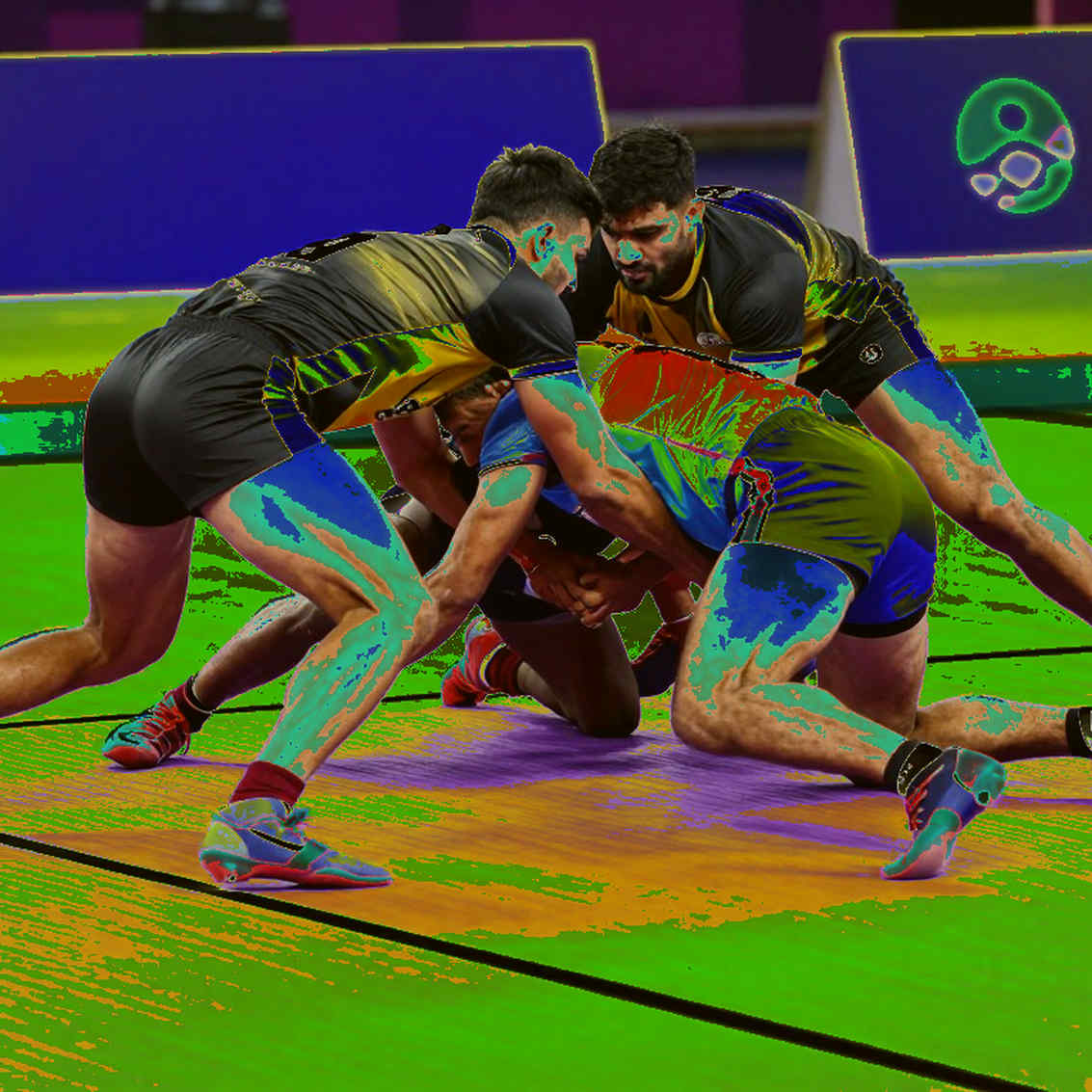
Asian Games kabaddi is played in Standard Style — a rectangular court, 13 metres by 10 metres, a forty-minute match. The rulebook needs laying out once, because the semifinal story is written inside it. The raider is bound by three conditions: the cant, the continuous 'kabaddi' chant, which voids the raid if broken; a thirty-second limit; and a safe return to his own half. A touch is one point. Crossing the bonus line is one point, but only when the defending side has six or more players on court. A super tackle — made with three or fewer defenders — is not one point but two.
The last item on that list is what makes kabaddi a different game. An all out is not merely two points; it resets an entire seven-man lineup. Inside forty seconds the scoreboard can swing four to five points. The semifinal is single elimination — there is no second chance. The rule structure itself rewards volatility, and that is the least discussed truth in Asian Games coverage.
The do-or-die rule compounds it. After two consecutive empty raids, the third becomes compulsory; score nothing and the raider himself is out. The rule turns a passive raider into an itemised cost.
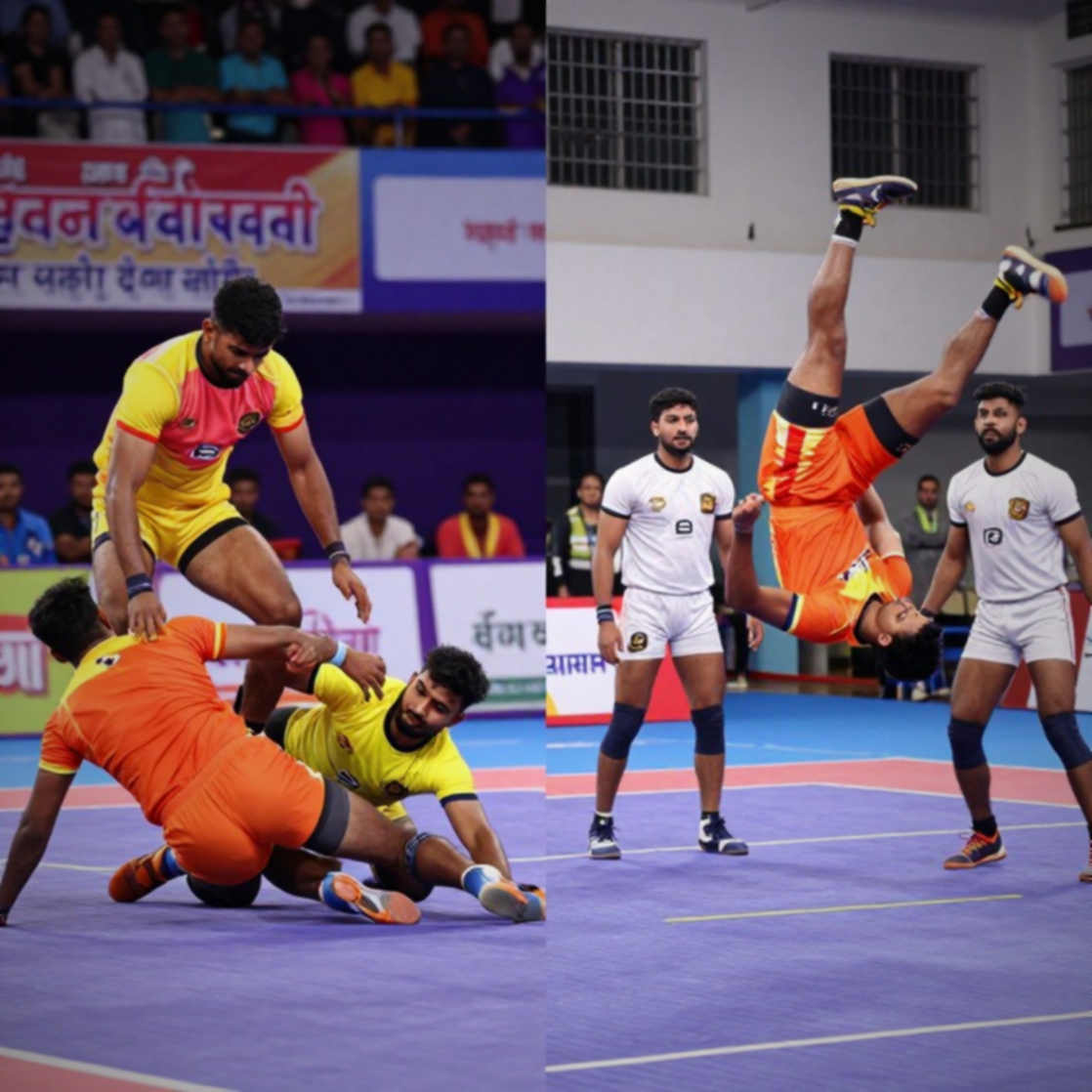
Both Indian squads draw their core from the Pro Kabaddi League pool. The women's picture differs: India has no professional women's league. The Asian Games is therefore the largest visible platform for South Asian women's kabaddi, and Nepal's presence on it is not a small thing.
Let us place the word 'unbeaten' on the table.
Unbeaten is an outcome, not a process. Group-stage opposition is not semifinal opposition. About a side that stayed unbeaten against weak opponents, exactly one thing is known: it won. Not how it won, not how much pressure it absorbed, not how often it stared down a do-or-die raid.
Knockout structure discounts volume statistics. In a league, a weak braiding habit is forgiven across six matches. In a single-elimination forty minutes, it is not. What is a minor flaw in the group stage becomes the result in the semifinal.
Bench depth is the real application of the do-or-die rule. Aggressive raiding risk is affordable only for a side with a next raider to send on. Without an alternative, do-or-die is a coin toss. Both Indian squads carry greater pool depth — an uncontroversial observation. The same strategy is not sustainable for Thailand or Nepal. Here I am explicit: that is inference, not data.
Thailand and Nepal reaching the semifinals is a positive, but not proof of a closing gap. Kabaddi's international structure has long been unipolar around India. Iran is the nearest men's challenger, South Korea the tier below. Thailand's and Nepal's results can equally be explained by bracket structure and broader participation.
The missing information says the most. The guide never states who contest the other semifinal. So the question of whether India's path is hard or soft has no answer. I cannot make a declaration; I can only mark the gap.
The two matches sit just 75 minutes apart at the same venue. That means a shared warm-up window, a shared broadcast slot, and the ambience of the men's match building before the women's has even begun. I will not claim this broadly distorts on-court performance — but both squads are bound to the same session protocol, and that protocol gets no coverage at all.
The broadcast picture is also worth pausing on. Indian rights sit with Sony Sports Network, streaming on SonyLIV, and the times are given only in Indian Standard Time. Those three facts together draw a clear boundary: the audience for this story is Indian. That is worth remembering before describing kabaddi as a globally consumed product.
The contrarian angle — where I could be wrong
I admit my first decision is fixed in advance: I set the metric before I let the screen talk to me. From that caution comes a question — does an unbeaten run really say nothing?
It says something. Avoiding two consecutive empty raids does not mean a raider is free of pressure; it means his raiding plan is mature. A side that does not habitually fall into the do-or-die trap has rhythm in its planning. That is a process signal, not an outcome signal. If India's empty-raid rate in the group stage was unusually low, my volume-stat argument weakens.
There is another place I want to be careful. Knockout means volatility — that generalisation is easy, but here the gap between expectation and reality is small. India's gold claim is not a fairy tale; it is a structural consequence. There are no fairy tales, only matchups — and in this matchup, India is the favourite. Bracket analysis must not become a way of inflating Thailand or Nepal.
One final admission: the information gap cuts both ways. I hold no semifinal-level statistics for Thailand or Nepal either. So the phrase 'weaker opponent' is something I too am saying on half-proven ground.
The stability index
Before endorsing any tactical trend, I want at least ten matches, two pressure situations and one injury return. This semifinal will not count toward those ten. What I see across two matches is a sample, not a trend. Anyone trying to extract 'a new Indian era' or 'the rise of Thailand' from these two games is building a structure on a sample.
What the data actually supports
After the whistle, watch two numbers rather than the scoreboard. One, do-or-die conversion — a decline means a crack in confidence over the final ten minutes. Two, the super tackle count — a rise means the defence is holding under pressure and the cost of fouling is climbing. In a semifinal, the unbeaten tag stays safe only as long as the opponent stays weak. The curtain rises at 9:30 am on 25 September; the applause stops right after.