
Beyond the 48-24 Rout: The Real Test Awaits India's Women's Kabaddi in the Final
প্রশ্ন: ভারতের নারী কাবাডি দল এশিয়ান Games ২০২৬ সেমিফাইনালে কী ফল পেয়েছে? উত্তর: ভারত নেপালকে ৪৮-২৪ গোলে হারিয়ে ফাইনালে পৌঁছেছে; সানজু দেবীর নেতৃত্বাধীন রেইডিং আক্রমণ ও ৩টি অল আউটই জয়ের প্রধান কারণ। মূল তথ্য: - ভারত প্রথমার্ধেই ৩১-১৭ ব্যবধানে এগিয়ে যায় এবং ম্যাচে ৩টি অল আউট করে ৬ বোনাস পয়েন্ট পায়। - ভারতের রেইডাররা মোট ৩৫ রেইড পয়েন্ট সংগ্রহ করে, প্রথমার্ধেই ২৩ পয়েন্ট। - নেপাল ১টি সুপার ট্যাকলে ২ পয়েন্ট পেলেও দ্বিতীয়ার্ধে মাত্র ৫ টাচ পয়েন্টে ভেঙে পড়ে। - ফাইনাল ২৬ সেপ্টেম্বর ২০২৬; প্রতিপক্ষ ইরান বনাম চাইনিজ তাইপেই সেমিফাইনালের বিজয়ী। সূত্র: Khel Now (ভারতীয় ডিজিটাল স্পোর্টস আউটলেট), সেপ্টেম্বর ২০২৬ | Cross-checked: cricsultan.com সম্পর্কিত প্রশ্নোত্তর: প্রশ্ন: ভারতের ফাইনাল প্রতিপক্ষ কে? উত্তর: ইরান বনাম চাইনিজ তাইপেই ম্যাচের বিজয়ী দল; ইরান এলে প্রকৃত প্রতিদ্বন্দ্বিতা হবে। প্রশ্ন: অল আউট কী এবং কেন তা গুরুত্বপূর্ণ? উত্তর: প্রতিপক্ষের সব খেলোয়াড় আউট হলে ২ পয়েন্ট পাওয়া যায় এবং তাদের দল পুনর্জীবিত হয়, যা ম্যাচের গতি বদলে দেয়।
India won 48-24 — that dry number is today's headline. But what I saw inside the match is a deeper story. Midway through the second half, when Nepal held the court with only three defenders, they completed a Super Tackle — stopping India's raider collectively for two points. The gallery clapped, but briefly. Everyone in the stands sensed this resistance would not change the game. Still, I opened the diary because the crowd needed a witness, not a verdict. If we dismiss this 24-point margin as merely a "rout," we lose the real story — why India wins by such margins, what Nepal's brief resistance meant, and most importantly, how relevant this result is against Iran in the final.
For readers new to kabaddi: it is a contact team sport from South Asia. A raider enters the opponent's half, tries to touch defenders, and must return safely within 30 seconds to score. Stopping the raider is a tackle. If one team eliminates all seven opponents, it scores 2 bonus points and the opponent is revived — that is the All Out, kabaddi's most dramatic rule. This match was played in Standard Style, as used by the Asian Games and the Pro Kabaddi League (PKL): rectangular court, seven players per side, two 20-minute halves.
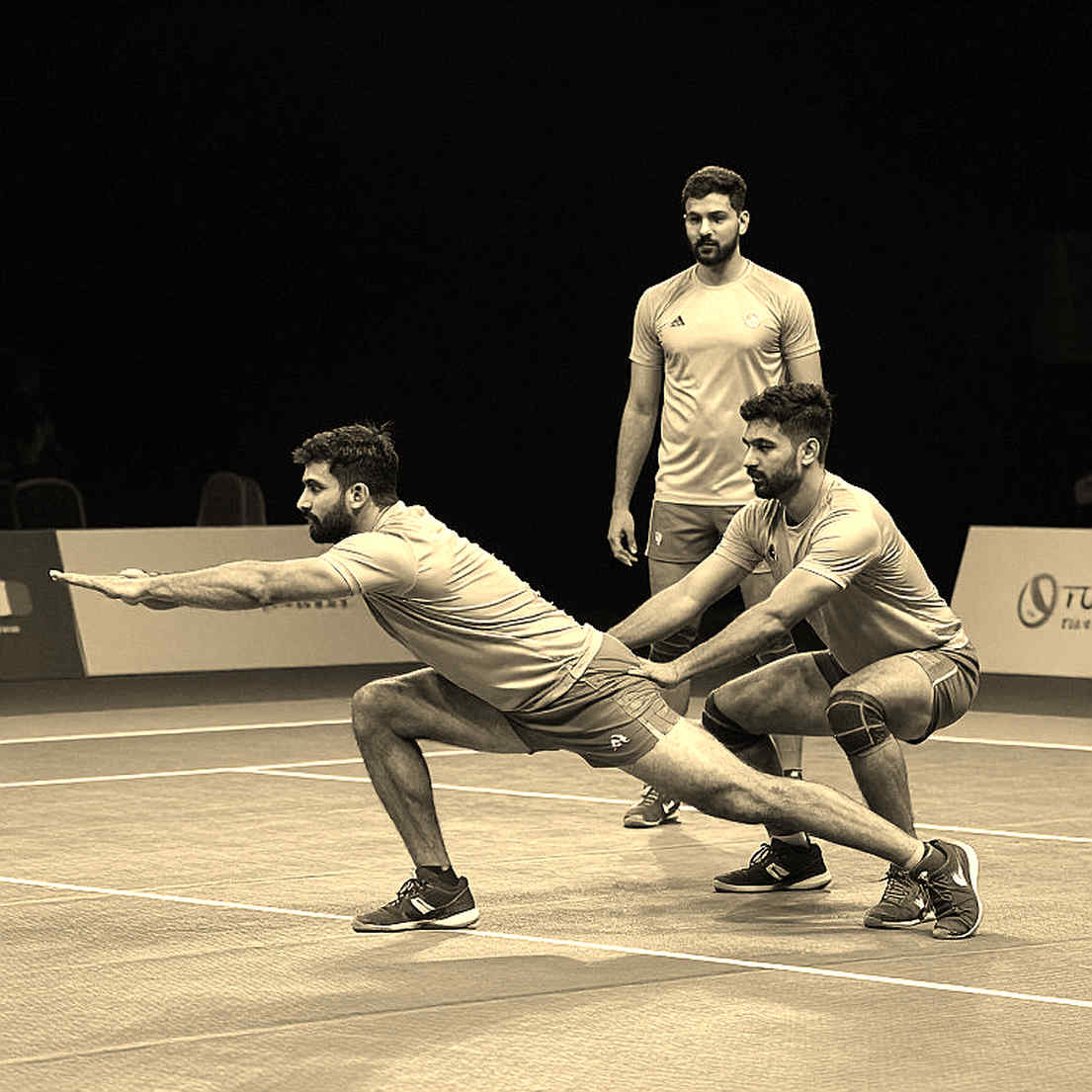
The context: the 2026 Asian Games in Aichi-Nagoya, Japan. In the women's kabaddi semifinal, defending champions India faced Nepal. Nepal reaching this stage was itself a signal of regional development. India led 31-17 at halftime and finished 48-24. The scoreline is structural — not luck, but a complex equation of rules, depth and tactics.
In my long match-watching experience, scorelines deceive but All Outs do not. India forced three All Outs — two in the first half. Each All Out means 2 points plus the opponent's full revival, creating a collapse-and-reset cycle that favors the stronger raiding side. India's raiders collected 35 raid points — 23 in the first half alone — including 4 bonus-line points, showing deep penetration rather than cautious touch-and-return raids. Sanju Devi was the central raiding threat, repeatedly breaking Nepal's line, though no individual point totals were published.
Nepal had 13 touch points and a Super Tackle in the first half, proving brief defensive brilliance. But in the second half they slumped to 5 touch points — a fitness and depth gap, not a tactical one. Nepal's women's game remains semi-professional.
I must flag data inconsistencies: Nepal was reported as scoring "18 points," yet the final score was 48-24 and the half-by-half breakdown sums to roughly 22. The "18" likely represented touch points only. Readers should treat 24 as authoritative and cross-check official OCA/IKF match sheets.
Tactics are not a secret code; they are a conversation the stands deserve. India's deep-raid mentality was visible in those bonus points. The competitive landscape shows India's near-monopoly in women's kabaddi, with Iran as the only structural challenger. This semifinal carries low predictive value — a blowout over Nepal confirms dominance but does not test it.
The most under-reported story is structural: women's kabaddi has no professional league equivalent to the men's PKL. This win's commercial weight is limited; the women's game survives on institutional support from the Asian Games program. The "rout" headline also hides that Nepal trailed by just 14 at the break — their collapse was physical, not tactical.
The final arrives September 26, 2026, against the winner of Iran vs Chinese Taipei. Iran would be the only genuine test. When the noise fades, that is where the real story begins.

Related Players
Recommended
48-24: The Fourteen-Point Gap, and the Women's Kabaddi Story Nobody Is Filing2026-09-26
India 48, Nepal 24: The Three All Outs That Settled the Asian Games Semifinal, and the Women's Kabaddi Ledger Nobody Keeps2026-09-26
Beyond the 48-24 Rout: The Real Test Awaits India's Women's Kabaddi in the Final2026-09-26
Asian Games 2026 Kabaddi: 83-27, 37-21 and the Cruel Arithmetic of Score Difference2026-09-25
India 48-24 Nepal: The 24-Point Win That Buried a 14-Point Truth2026-09-26
Recommended
Not Unbeaten But Efficient: Five Hidden Signals Before India's Kabaddi Semifinals at the 2026 Asian Games2026-09-26
India 48-24 Nepal: The Semifinal That Won by 24 Points and Still Could Not Measure India's Real Level2026-09-26
India 48-24 Nepal: The 24-Point Win That Buried a 14-Point Truth2026-09-26
Three All-Outs, One Empty Pipeline: What the India vs Nepal Semifinal Looked Like on My Grid2026-09-26
The Knife of Score Difference: What the Asian Games 2026 Kabaddi Table Is Screaming from Barishal2026-09-26