
Thirty-Six Teams, Fifteen Days, Rp 50 Million: The Ledger Indonesia's Campus League Leaves Open for Bangladesh
**মূল উত্তর (৬০ শব্দের মধ্যে)** Leagueা ভলি মাহাসিসওয়া (LVM) ২০২৬ হলো ইন্দোনেশিয়ার প্রথম ক্যাম্পাস Volleyball League, যা মিডিয়া প্ল্যাটForm MOJI আয়োজন করছে এবং VIDIO সম্প্রচার করবে। ২৪টি বিশ্ববিদ্যালয়ের ৩৬টি দল (১৮ পুরুষ, ১৮ মহিলা) যোগকার্তা, সুরাবাজা ও জাকার্তায় ১৫ দিনে ৬০ ম্যাচ খেলবে; মোট পুরস্কার প্রায় ৫ কোটি রুপিয়া। **মূল তথ্য** - আয়োজক MOJI, স্ট্রিমিং সঙ্গী VIDIO; ড্র অনুষ্ঠিত ২৫ সেপ্টেম্বর ২০২৬, ইভেন্ট ৭–৩১ অক্টোবর ২০২৬। - ভেন্যু: জিওর ইউআইআই (যোগকার্তা), জিওর ইউনেসা (সুরাবাজা), জিওর পার্টামিনা সিম্পরুং (জাকার্তা)। - প্রতি সিরিজে ২০ ম্যাচ, দিনে ৪টি; প্রতি জেন্ডারে তিন দলের দুটি পুল, অর্থাৎ দলপ্রতি ন্যূনতম দুটি গ্যারান্টিড ম্যাচ। - প্রতি সেক্টরে পুরস্কার: ১ম ১ কোটি, ২য় ৭৫ লাখ, ৩য় ৫০ লাখ, ৪র্থ ২৫ লাখ রুপিয়া। - উল্লিখিত সব দল জাভা দ্বীপে; সুমাত্রা, কালিমান্তান, সুলাওয়েসি বা পূর্ব ইন্দোনেশিয়ার কোনো ক্যাম্পাস নেই। **উৎস নির্দেশনা** Bola.net-এর প্রতিবেদন (MOJI-র ইভেন্ট-ঘোষণা অবলম্বনে); ড্র-এর তারিখ ২৫ সেপ্টেম্বর ২০২৬। জাতীয় সংস্থা PBVSI-র স্বীকৃতির কোনো উল্লেখ উৎসে নেই, স্বতন্ত্র যাচাই করা হয়নি। **সম্পর্কিত প্রশ্নোত্তর** প্রশ্ন: LVM ২০২৬-এর ম্যাচ Format কী? উত্তর: প্রতি জেন্ডারে প্রতি সিরিজে তিন দলের দুটি পুল, অর্থাৎ দলপ্রতি ন্যূনতম দুটি গ্যারান্টিড পুল ম্যাচ, তারপর নকআউট। প্রশ্ন: LVM কি PBVSI-স্বীকৃত? উত্তর: উৎস প্রতিবেদনে PBVSI-র কোনো উল্লেখ নেই; ইন্দোনেশিয়ার ফেডারেশন-স্বীকৃতি এবং জাতীয় পাইপলাইনের সংযোগ অনিশ্চিত। প্রশ্ন: বাংলাদেশের জন্য এই আয়োজনের তাৎপর্য কী? উত্তর: বাংলাদেশে প্রতিভা-পাইপলাইন মূলত প্রতিষ্ঠানভিত্তিক সার্ভিস দল (সেনা, নৌ, পুলিশ, আনসার ও ভিডিপি, পিডিবি); ক্যাম্পাস-League মডেল সেখানে ব্যতিক্রমী পথের প্রশ্ন তোলে।
Hook: The Two Hours Nobody Calls News
The first serve at GOR Pertamina Simprug in Jakarta goes up at 11:00 Western Indonesian Time. The equivalent day at GOR UII in Yogyakarta and GOR Unesa in Surabaya begins at 13:00. A two-hour differential. In Indonesian domestic volleyball nobody files that as news.
I file it as news.
Because right now I have no match footage. No spike efficiency, no block-touch counts, no reception chart. I have a schedule grid, a prize table, a team list and a press announcement. This has been my habit for decades of tactical writing: when the tape doesn't exist, the schedule grid becomes the tape. And what that grid says, in two hours of difference, is this: at this event the cage around the match matters more than the match.
Moving Jakarta two hours earlier is usually about venue-rental windows or broadcast slot pressure. Both are logistics, both sound harmless. But logistics never stay outside volleyball. Warm-up time shrinks, rest windows shift, the last match empties the arena before the floodlights cool, attendance rhythm changes.
The first number matters here. Liga Voli Mahasiswa 2026 will field eighteen men's and eighteen women's teams — 36 teams from 24 universities, 60 matches across 15 competition days. The numbers sound large. But if these numbers belong to a calendar rather than to volleyball, where does the analysis start?
I found the rotation room the day I stopped counting players and started counting intentions. This schedule grid is the same kind of room — every slot has a decision written beside it, just in a smaller font.
Context: A Media Company Builds a Campus Stage
The event is new. Liga Voli Mahasiswa — LVM — launches its first edition in 2026. The organiser is MOJI, an Indonesian sports media platform; the streaming partner is the OTT platform VIDIO. Banardi Rachmad, MOJI's Deputy Director of Programming, framed the launch around campus becoming a new stage for volleyball and a showcase for young talent. The organiser's own release describes 36 teams competing for "stage and development money."
The structure runs as three city series: GOR UII Yogyakarta on 7–11 October, GOR Unesa Surabaya on 14–18 October, and GOR Pertamina Simprug Jakarta on 27–31 October. Each series carries 20 matches, four per day. The draw was conducted on 25 September 2026. Each gender is split into two pools of three. Prize money is equal across sectors: Rp 10 million for first, Rp 7.5 million for second, Rp 5 million for third, Rp 2.5 million for fourth.
This information comes from a Bola.net report built on MOJI's event announcement. What I am reading is therefore an organiser's own statement — reliable on logistics, unverified by any independent sporting body.
That caveat matters because the Indonesian pyramid has to be placed correctly. At the top sits the senior national team, whose recent context is threaded through Asian Games 2026 results in the surrounding coverage. Below it, the professional tiers: Proliga, then Livoli. Below that, the university level where LVM now enters. At the base, school volleyball.
LVM is not an alternative to that professional structure, not a rival to it, not even formally a part of it. It is a media-organised event standing alongside the pyramid. Read it any other way and the rest of the analysis lands in the wrong column.
Bangladesh sharpens the contrast. Our pipeline does not run through campuses. Our rotation room is the service teams — Army, Navy, Police, Ansars & VDP, and institutional sides like PDB. Those teams are simultaneously the salary structure, the talent pipeline and the national-team feeder. Indonesia has just inserted a new arch into the same wall. How much weight it can carry is the real question.
Core 1: One Brand, Three Separate Festivals
The series design is not merely logistical; it changes what the competition means. Yogyakarta ends 11 October, Surabaya starts 14 October — a sensible three-day transit gap. Surabaya ends 18 October, Jakarta starts 27 October — nine days, eleven with travel.
Anyone dismissing that gap as sloppy scheduling is missing it. The gap concedes that the three series are three separate regional festivals wearing one brand's shirt. If the three series champions met in a final play-off, the eleven days would at least hold a thread. No such thread appears in the announcement. Whether a cross-series final exists is the largest blank in the document.
In branding terms this is efficient: three cities, three audiences, one trophy brand. In sporting terms it is corrosive. A national title only means something when the title-holder is identified through a continuous structure. If Yogyakarta's champion and Jakarta's champion never meet on a court, both get called league champions. That is a marketing decision, not a competitive one.
My years of watching matches tell me format is never a neutral container. Format is a hand. A format that denies a team the chance to show its real strength does not just create champions — it creates the wrong ones.
Core 2: Two Guaranteed Matches, and a Lot of Luck
Two pools of three per gender per series. That gives each team exactly two guaranteed matches before knockout. A university side travels out of its campus and is promised two matches of court time. On those two results an entire campaign can end.
This is the format's hidden cost: the more teams, the smaller each team's sample — and the smaller the sample, the larger the random component of a single match. Anyone who has watched a setter pick up an injury, or a service-reception patch collapse for twenty minutes, knows how fragile two matches are.
Win the first pool match and a team is effectively through; lose it and the second becomes survival. The fairness of the tournament can be settled in one evening.
The fix is not complicated, but it costs the organiser something: four-team pools, more days, or more matches per day. There is a reason 36 teams fit into 60 matches: 20 per series, four per day, four clean broadcast slots. A deliberate commercial choice has been made between quality and packaging. Competition fairness pays the bill.
A warning belongs here. Nothing in the source data supports any claim about the technical level of campus volleyball. I do not know whose setter is better, whose reception system is stable, which coach trusts quick variations. Without a sample, assertion becomes invention. I can read structure, and structure says the decisive events here will happen inside heads more than on whiteboards.
Core 3: The Map Stops at Java
Line up the campuses: Yogyakarta, Semarang, Surabaya, Malang, Jakarta, Bandung, Kediri. All on Java. No Sumatra, no Kalimantan, no Sulawesi, no Papua, no Maluku.
Some will call this natural, since Indonesian university density is highest on Java. True. But density and opportunity are not the same thing, and a structure that accepts imbalance as natural institutionalises it. A league that calls itself a national stage while every team comes from one island borrows against its own identity. Talent does not stop at Java's coastline; it only goes unrecorded. Demanding geographic expansion in an inaugural edition would be unreasonable. Recording the imbalance now prevents someone discovering it in three years as a fresh scandal.
Core 4: Rp 50 Million, USD 3,100, and the Words "Development Money"
Per sector: Rp 10 million, 7.5 million, 5 million, 2.5 million. Across both sectors roughly Rp 50 million — a little over an estimated USD 3,100. Fourth place, Rp 2.5 million, is roughly USD 155, about eighteen to nineteen thousand taka. The organiser itself calls this development money: reward for participation rather than price for performance.
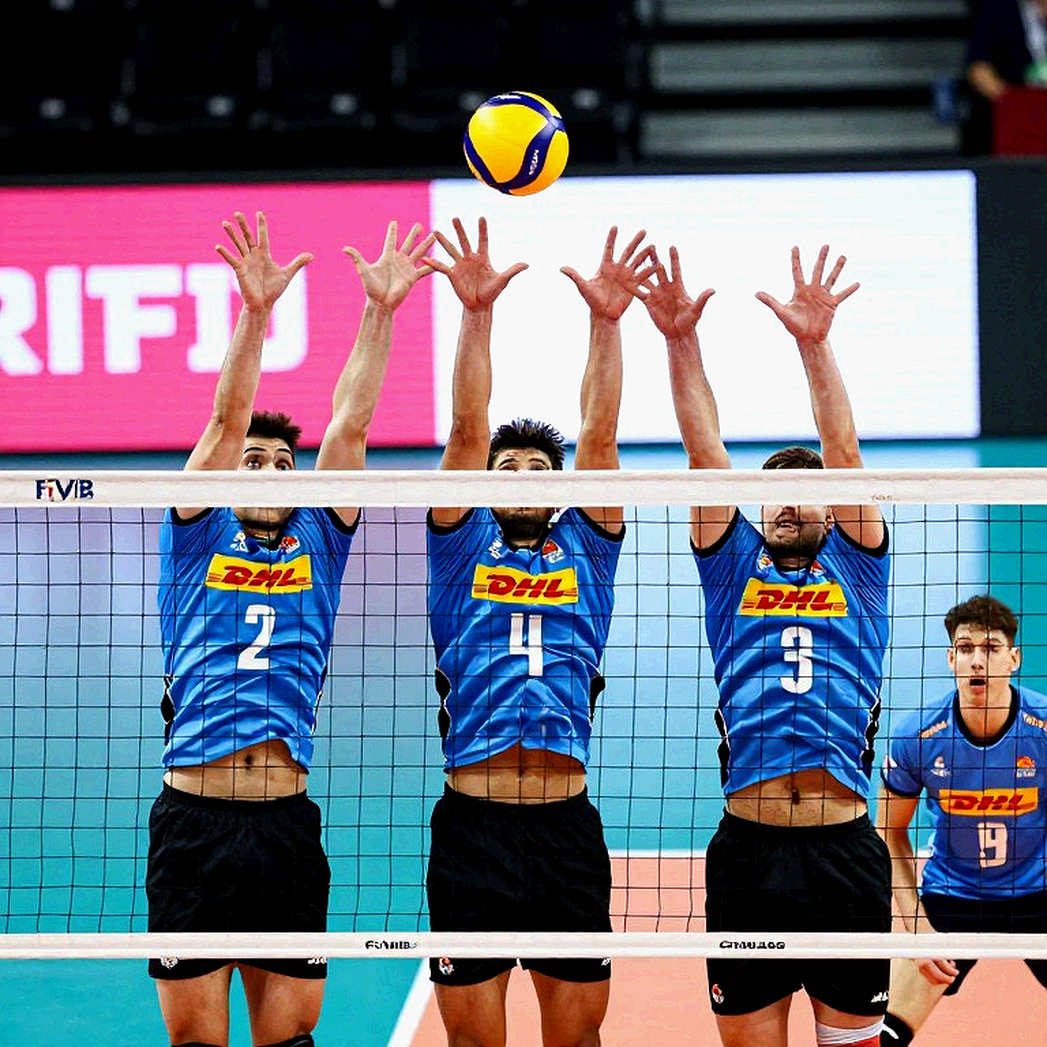
In Brazil I learned that volleyball survives when a salary chain and a career path exist at club and district level — not as a benchmark to shame anyone, but as a reminder that the pipeline is an employment structure before it is a talent structure. In Bangladesh that structure is the service teams. Indonesia's LVM proposes a different route: media funding, branded broadcast, small cash prizes. The question is how far an athlete can travel on that route. Small money means small pull — but visibility, scouting and regional pride also pull. A campus team seeing its own jersey on a VIDIO screen may gain more than Rp 2.5 million buys. That is the event's real opportunity and its real risk, sitting in the same spot.
Core 5: The Broadcast Window Is the Real Rulebook
Four matches, four fixed slots: 13:00, 15:00, 17:00, 19:00 in Yogyakarta and Surabaya; 11:00, 13:00, 15:00, 17:00 in Jakarta. A pattern that tidy is set to broadcast rhythm. The Jakarta shift likely reflects venue booking or a slot clash. What matters is that this structure is optimised for a content calendar, not a competition. Broadcasters get precise cut-off times because volleyball has no draws. Players get a trap: if two match days fall back-to-back, a student athlete has no recovery mechanism.
At this level the load is modest, and I am not inventing an injury crisis. The point is narrower and harder: broadcast design no longer lives outside volleyball. It is a player on the court, and the coach, the labour and the sleep are all inside its hands.
Core 6: The Missing Documents Speak Loudest
No points system. No tiebreaker rules. No advancement criteria. No eligibility standard for student athletes. No word about PBVSI, Indonesia's national volleyball federation. For a first national-branded league across 24 universities, a federation mention would normally appear somewhere — as sanction, recognition, or shadow. Its absence means either no sanction, an editorial cut, or a judgement that it was irrelevant. Without federation recognition, results and player status float free of the national pathway. Media-organised, media-broadcast, media-run: administrative ownership sits with one company, which is the largest structural fragility here. None of this is misconduct. In a first edition such gaps are normal. But decisions are still made when documents are silent — they are simply made off the record.
Contrarian: Everyone Is Staring at 36
Thirty-six teams. That is the number everyone will applaud: 24 campuses, an 18/18 gender split, equal prize money. The numbers point in a flattering direction.
I think they point at the wrong door. A league's competitive value is measured by bracket density, not participation breadth. Here density is thin: two guaranteed matches, then knockout. How many of those 36 teams will genuinely test a plan against another team? Almost none.
Thirty-six teams will sell the record; thirty-six teams' volleyball will leave no record. Campus volleyball's biggest enemy is not weak play, it is weak memory. A league that does not preserve its results, its best servers or its best blockers restarts from zero every year — and risks calling each edition a first edition forever.
Takeaway: Six Signals for Next Time
Watch for a second edition — and whether it is announced by MOJI alone or jointly with PBVSI. Watch for a published rulebook on points, tiebreaks and eligibility. Watch for one campus outside Java; that single name would be the first brick of a national-stage claim. Watch for a cross-series final, which would convert an eleven-day gap into a road. Watch whether anyone keeps the play-off data. And watch who explains the gap between Surabaya and Jakarta — the organiser or the players.
The most important piece of technology in Asian campus sport is not a camera; it is a ledger. After decades of waiting, the question this league leaves is uncomfortably simple: if someone draws the best spike at a Jakarta court on 27 October 2026, will anyone remember whose it was six months later? If the answer is no, then whatever this event is called, its address remains outside.