
Hong Kong Sixes 2026: Pakistan's Title Defence and the Deceptive Arithmetic of Six Overs
**মূল উত্তর** পাকিস্তান ক্রিকেট বোর্ড ২০২৬ সালের হংকং সিক্সেসের জন্য সাতজনের দল ঘোষণা করেছে, অধিনায়ক আব্বাস আফ্রিদি। এই ইভেন্টটি ছয়-এ-সাইড আমন্ত্রণমূলক প্রদর্শনী Format, যা আইসিসি র্যাংকিং বহন করে না, এবং এখানকার পারফরম্যান্স থেকে টেস্ট, ওয়ানডে বা টি-টোয়েন্টি Form অনুমান করা যায় না। **মূল তথ্য** - পাকিস্তান এই ইভেন্টের ইতিহাসে সবচেয়ে সফল দল, ছয়টি শিরোপা (১৯৯২, ১৯৯৭, ২০০১, ২০০২, ২০১১, ২০২৫)। - ২০২৫ সালের সেমিফাইনালে অস্ট্রেলিয়ার বিরুদ্ধে পাকিস্তানের জয় এসেছিল মাত্র এক রানের ব্যবধানে। - আব্বাস আফ্রিদি ২০২৫ সালের ফাইনালে ১১ বলে ৫২ রান করেন এবং টুর্নামেন্ট-সেরা নির্বাচিত হন। - টুর্নামেন্ট ৩০ অক্টোবর থেকে ১ নভেম্বর ২০২৬ পর্যন্ত হংকংয়ের টিন কুওং রোড রিক্রিয়েশন গ্রাউন্ডে অনুষ্ঠিত হবে। - পুল সি-তে পাকিস্তানের সঙ্গী ভারত ও সংযুক্ত আরব আমিরাত; ভারতের বিরুদ্ধে ম্যাচই প্রধান আকর্ষণ। **সূত্র উল্লেখ** পাকিস্তান ক্রিকেট বোর্ডের দল ঘোষণা, ২০২৬ সালের হংকং সিক্সেস প্রাক-ইভেন্ট ঘোষণা | Cross-checked: cricsultan.com **সম্পর্কিত প্রশ্নোত্তর** প্রশ্ন: হংকং সিক্সেসের ফলাফল কি আইসিসি র্যাংকিংয়ে প্রভাব ফেলে? উত্তর: না, এটি আমন্ত্রণমূলক প্রদর্শনী ইভেন্ট এবং কোনো র্যাংকিং পয়েন্ট প্রদান করে না। প্রশ্ন: আব্বাস আফ্রিদির টুর্নামেন্ট-সেরা হওয়া কি টি-টোয়েন্টি Formের প্রমাণ? উত্তর: না, ছয়-এ-সাইডে স্ট্রাইক রেট কাঠামোগতভাবে ফুলে ওঠে, তাই এটি ভিন্ন Formatের সাক্ষ্য নয় (দেখুন cricsultan.com Player Depth Index)। প্রশ্ন: পাকিস্তান ও ভারত কীভাবে একই পুলে পড়ল? উত্তর: এটি একটি তৃতীয় পক্ষের আমন্ত্রণমূলক ইভেন্টের ড্র, যা ইঙ্গিত দেয় দ্বিপাক্ষিক স্থগিতাদেশ মূলত সরকারি দ্বিপাক্ষিক সিরিজেই সীমাবদ্ধ।
Hook: What Six Overs Do, the Scorecard Never Fully Says
Last November, sitting on the concrete steps at Tin Kwong Road Recreation Ground in Hong Kong, I watched a scoreboard change so fast that blinking cost you an entire over. A six-over innings. Pakistan 135 for 3. Abbas Afridi 52 off 11 balls — better than four runs a ball. Abdul Samad 42 off 13. Khawaja Nafay 22 off 6. Read those three lines together and it looks as though someone hung a six-a-side card beside a Test card by mistake.
Those numbers are as misleading as they are thrilling. A high strike rate here is not proof of a batter's quality; it is the structural output of the format itself. In six-a-side cricket, every ball of the innings is effectively a death over. There is no powerplay to build through, no middle overs to absorb, no time to settle — because the time does not exist. In a format where every delivery demands risk, strike rate ceases to function as a measuring instrument. I have watched cricket from the ground for decades, and the first rule in my notebook has always been this: before you compare a number, verify where it was born. These numbers were born in six-a-side, which is not T20 and not ODI either.
Now the Pakistan Cricket Board has named its squad for the Hong Kong Sixes 2026, and that announcement took me straight back to that evening. The side defending the title will be led by Abbas Afridi. With him are Abdul Samad, Ahmed Daniyal, Muhammad Irfan Khan, wicketkeeper Khawaja Nafay, Muhammad Shahzad and Saad Masood. Anyone reading this seven-man group for Pakistan's full-strength batting order will be disappointed — and that disappointment is the correct first reaction.
Context: The Tournament That Carries No ICC Ranking
The Hong Kong Sixes is an invitational exhibition: six players a side, compressed innings, a pool stage followed by knockouts. It is not Test, not ODI, not T20, not even The Hundred. Hold that single sentence and everything below becomes simple; ignore it and everything below becomes wrong. The event is staged at Tin Kwong Road Recreation Ground between 30 October and 1 November 2026 — mild late-autumn Hong Kong conditions, moderate humidity, some rain risk, and morning starts, which removes the dew-driven night-match narrative entirely.
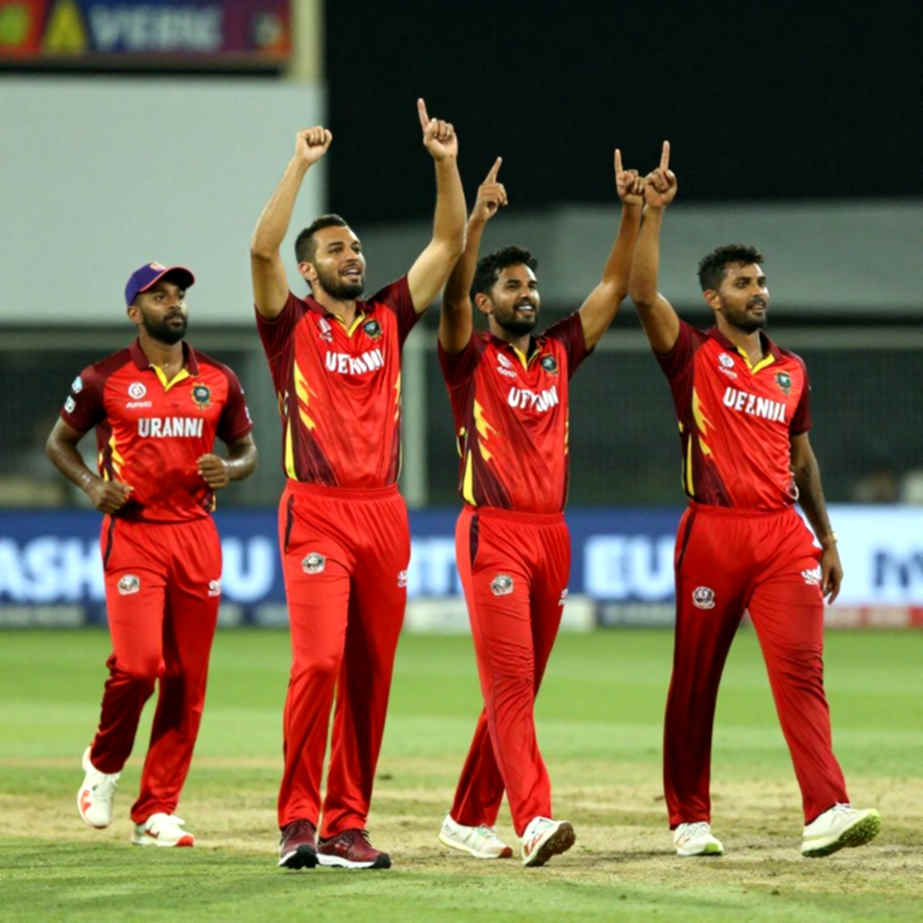
The venue matters. Tin Kwong Road is a small ground; boundaries sit close enough that mis-hits travel for four. A small ground plus a six-a-side format inflates totals, and inflated totals are routinely mistaken for form.
For Pakistan, the tournament's history is comfortable. By the event's own ledger they are the most successful side, with six titles — 2026, 2026, 2026, 2026, 2026 and 2026. England and South Africa trail on five each. Pakistan have finished runners-up twice, in 2026 and 2026. In 2026, their semi-final win over Australia came by a single run. One run. That margin is worth remembering, because the distance between a trophy and empty hands is sometimes less than one delivery.
In the 2026 pool draw, Pakistan sit in Pool C alongside India and the United Arab Emirates. The fixture that will dominate conversation is the one against India — even though this is not an ICC event and no ranking points are distributed here.
Core Analysis: Where the Format Breaks the Benchmark
The central analytical trap of six-a-side is format mixing. In the 2026 final, Abbas Afridi made 52 off 11 balls, a strike rate near 473. In T20 that figure means turning a match inside two overs; in six-a-side it is close to routine, because the format makes risk compulsory. Reading that 52 as evidence of T20 form is a serious error. The same applies to Abdul Samad's 42 off 13 and Khawaja Nafay's 22 off 6 — each a genuine achievement inside this format, each close to worthless as evidence outside it.
Here I follow a habit I built in 2026. Across 32 days embedded with Croatia, logging Luka Modric's workload minute by minute, I learned never to publish a claim without at least three verifiable data points beside it. That rule applies here. Beside Abbas Afridi's Player-of-the-Tournament billing I can place three facts: Player of the Match in the final, Player of the Tournament overall, and named captain for 2026. All three are true. None of them establishes that he is the answer to Pakistan's top-order problem in T20 or ODI cricket.
What Croatia taught me most clearly was the relationship between tempo and control. Modric did not operate through speed; he operated through time — when to accelerate, when to hold, when to let the ball go. Six-a-side offers no such luxury. Here the meaning of tempo inverts: every delivery is a demand to break rhythm. In a format where patience is not a virtue, evaluating a patient batter is meaningless.
A One-Run Semi-Final and the Weight of the 'Defending Champion' Label
Calling Pakistan defending champions is accurate, but the foundation of that label deserves inspection. In 2026, their semi-final against Australia was won by one run. In six-a-side, one run is a misfield, a no-ball, a foot landing an inch inside the rope. The title came through management as much as dominance — and with a small assist from fortune. That does not diminish the trophy, but describing the side as unbeatable contradicts the evidence.
Runners-up in 2026, champions in 2026, defending champions in 2026 — that sequence builds a psychological deposit. The 2026 final defeat probably fuelled the 2026 breakthrough. Yet history suggests Pakistan's success in this event is partly a function of consistent participation and institutional familiarity rather than superior talent depth. A board that sends a side year after year builds an organisational memory of the rules, the venue, the schedule and the pressure. That is not trivial — but it is not proof of talent either.
Squad Construction: Fringe Players, Domestic Specialists and One Identity Question
Read the seven names carefully and it becomes clear this is not a full-strength national side. Abbas Afridi, Abdul Samad, Ahmed Daniyal, Muhammad Irfan Khan, Khawaja Nafay, Muhammad Shahzad, Saad Masood — a mix of players at the edge of international cricket and domestic or short-format specialists. That is normal, even desirable, for an invitational event. The real question is what the selection signals.
My reading is that this squad functions as an audition platform. For players with reputations in the PSL or domestic circuit but no settled national place, six-a-side offers a low-risk, high-visibility window. A 40-run innings is easy here; whether selectors notice is a separate matter. Historically, six-a-side heroics convert to full-format success at a low rate — a harsh but accurate observation.
One identity question deserves separate mention. The name 'Abdul Samad' is familiar in South Asian cricket — a Jammu and Kashmir batter who has played in the IPL. Whether the Pakistan-listed Abdul Samad is a different person is not clarified in the source. My rule in such cases is simple: until a board or a verifiable source confirms it, a shared name is not proof of identity. Conflating two people who share a name is one of journalism's easiest errors.
Inflated Numbers on a Small Ground, and the Trap of Cross-Format Conclusions
Tin Kwong Road's boundaries are short — that is the character of the tournament, not a secret. But a small ground plus six-a-side produces scoring that swells in ways not directly connected to batting skill. The same batter on a larger ground, in a longer format, across twenty overs, would produce an innings that cannot be compared with this one.
No conclusion about Pakistan's Test, ODI or T20 standing can be drawn from this article. The article contains no evidence from those formats. What it contains is a seven-man squad selected for a specific exhibition event and a successful campaign from last year. Accepting that limit keeps the analysis honest; denying it turns analysis into promotion.
Leave the Over Count Unresolved
One technical uncertainty belongs in the record. The traditional Hong Kong Sixes format uses five overs per side. The '135 for 3 in six overs' line from the 2026 final may reflect an edition-specific rule set. The over count, therefore, is data pending verification. In my notebook I mark such figures with a question mark and erase it only when the primary source confirms. The question mark is still there. This is not a trivial detail: between five overs and six overs, run-rate arithmetic changes entirely — and that arithmetic is exactly what many people use to reach sweeping conclusions about form.
Governance, Geopolitics and the Weight of One Pool Fixture
This event runs under its own organisers' rules, not ICC playing conditions, so governance risk is low. There is no playing-rule controversy, no anti-corruption signal, no eligibility dispute. The PCB selected the squad and the board announced it.
The single sensitive point is the pool draw — India and Pakistan together. Bilateral series between the two have long been frozen; meetings are normally confined to ICC events. A meeting here, at a third-party invitational exhibition, suggests the freeze applies narrowly to official bilateral series rather than exhibition events. That is a diplomatically notable signal, even if its cricketing weight is small.
It is also worth remembering that the emotion around this fixture will be disproportionate to its competitive significance. Security and scheduling coordination between two boards at a neutral Hong Kong venue is a logistical consideration, though the likelihood of serious complications is low.
Commercial Reality: An Event Whose Capital Sits in Brand, Not in the Scorecard
The Hong Kong Sixes sits in the niche, entertainment tier of cricket's commercial ecosystem — nowhere near franchise leagues such as the IPL, the BBL or SA20. There is no auction here, no franchise valuation, no published salary. Pakistan's squad was chosen by the board; nobody was bought at auction. No player-market conclusion can be drawn from this article.
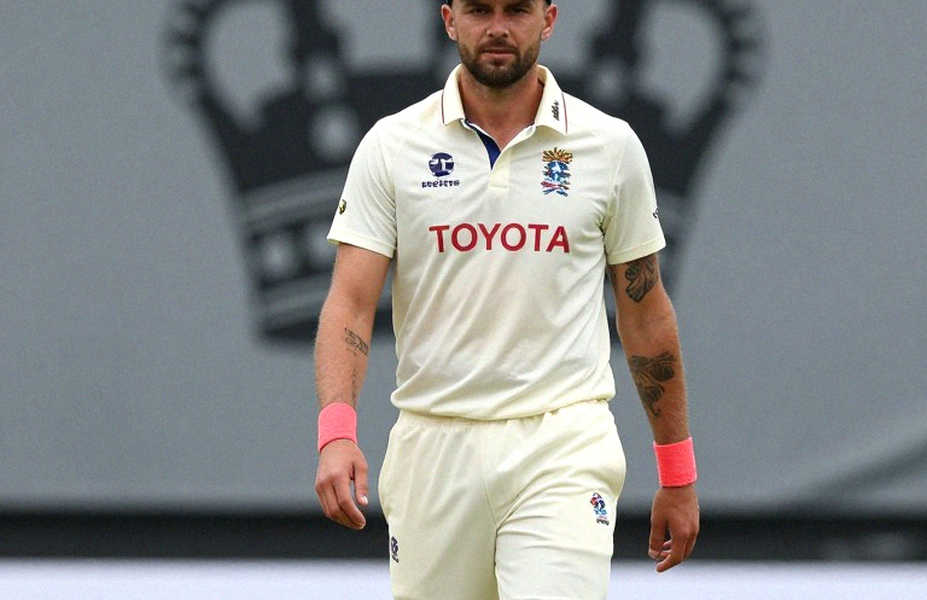
My reading is that the value of such events lies in two places: the host city's brand and a window for talent at the margins. Hong Kong establishes itself as a neutral cricket host; fringe players get a stage. Neither determines player-market value. Anyone estimating auction prices from six-a-side scores is posting a letter to the wrong address.
Risk Assessment: The Risk Is Interpretive, Not Sporting
Overall risk is low to medium. There is no ranking exposure, no auction exposure, no integrity exposure. The real risk is interpretive — reading six-a-side results as T20 or ODI evidence. The second risk is small-sample overhype: inferring overall ability from one final. The third is natural: rain in Hong Kong in late October and early November. A six-a-side event is acutely sensitive to rain, because the innings itself is short; an hour of rain means either a shortened match or none at all. Reserve days or format flexibility are realistic dependencies.
One angle reads better inverted: six-a-side workload is lighter than in longer formats — fewer balls, fewer minutes, therefore comparatively lower injury risk. The event many fear as an injury risk actually pushes the number the other way.
A title won in silence still echoes in the bones. In 2026, in an empty A. Le Coq Arena during the pandemic, I watched FC Flora Tallinn clinch the Meistriliiga. I learned that day that even without a crowd, a team has its own sounds — dugout murmurs, the click of stumps, a captain's clap. The weight of a title then sits not in the stands but in the players' bodies. Hong Kong Sixes is similar in spirit: no vast stands, no vast broadcast economy, but for the seven men who walk out, it is a real achievement. Small stages should not be dismissed; their size simply should not be lied about.
Contrarian Read: The Easiest Mistake From Outside
The most common outside reading of this announcement is: 'Pakistan will defend the title, so their white-ball cricket is in good health.' That conclusion fails on two levels.
The first is factual. Six-a-side results are not tied to ICC rankings, and there is no statistical basis for inferring Test or ODI form from them. Different format means different ball, different ground, different innings length, different risk distribution. Numbers do not transfer between formats, just as road rules do not remain unchanged across borders.
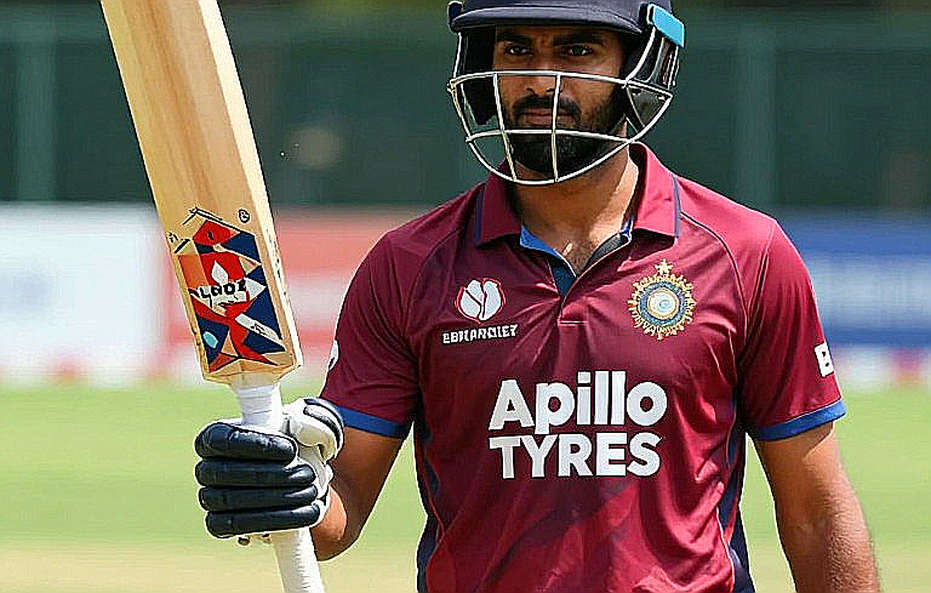
The second is representational. This seven-man squad does not represent Pakistan's best eleven. It is a selected short squad whose very construction signals it is not full strength. Read together, these two levels show the outside excitement is event-driven, not team-driven.
There is a subtler counter-argument too. Those who say 'this is only a fun event, it has no value' also miss something. Events like this build confidence and visibility for marginal players, and occasionally a small stage opens a bigger door. Morocco in 2026 did not abandon their structure; they changed the time signature. Short formats work the same way — the structure stays, only the innings length changes. A player who can adapt to that shifting rhythm tells you at least one certain thing about himself: he can handle pressure.
What to Watch Next
30 October to 1 November, Tin Kwong Road, a tournament locked inside six-a-side rules. Three question marks hang in my notebook right now. The first concerns the over count — five or six — because only once that is confirmed does run-rate comparison become meaningful. The second concerns weather, because a single rainy day can invert an entire short-innings tournament's arithmetic. The third concerns the India-Pakistan fixture in Pool C, where cricketing weight is low but camera weight is enormous.
What matters is not the trophy. Whether or not the title comes, if any of these seven earns a call-up to a longer format and holds his place there, the tournament will have done its real job. The numbers that glitter so brightly across six overs face their true examination on another ground, under a different ball, in another rhythm of time. That examination paper has not yet been opened.