
Chennai Tickets and the Rauf Rumour: How Big Bash 16 Is Breaking Its Own Borders
**Core answer:** ক্রিকেট অস্ট্রেলিয়া বিগ ব্যাশ League-১৬ এর ৪৪ ম্যাচের সূচি ঘোষণা করেছে; এই আসরে প্রথমবার কোনো ম্যাচ ভারতের চেন্নাইয়ে হবে। একই সময়ে অ্যাডিলেড স্ট্রাইকার্স পাকিস্তানি পেসার হ্যারিস রউফকে দলে নেওয়ার কথা ভাবছে বলে খবর, তবে এটি এখনো চুক্তি নয়। **Key facts:** - বিগ ব্যাশ-১৬ শুরু ১২ ডিসেম্বর, ফাইনাল ২৬ জানুয়ারি অস্ট্রেলিয়া ডে-তে। - ১৮ জানুয়ারি চেন্নাইয়ে রেনেগেডস বনাম স্করচার্স — Leagueের প্রথম বিদেশি ভেন্যু। - হ্যারিস রউফ মেলবোর্ন স্টার্সের হয়ে ৩৩ ম্যাচে ৫৬ উইকেট নিয়েছেন, Economy ৭.৯২। - রউফের বিগ ব্যাশ খেলা নির্ভর করে পাকিস্তান ক্রিকেট বোর্ডের এনওসির উপর। - পার্থ স্করচার্স গত আসরের ডিফেন্ডিং চ্যাম্পিয়ন হিসেবে নামছে। **Source attribution:** মূল সূত্র: বিগ ব্যাশ League-১৬ সূচি ও হ্যারিস রউফ সংক্রান্ত প্রতিবেদন, ক্রিকেট অস্ট্রেলিয়া। | Cross-checked: cricsultan.com **Related Q&A:** Q: হ্যারিস রউফ কি বিগ ব্যাশ-১৬ খেলবেন? A: এখনো নিশ্চিত নয়; এটি গুজব, এবং পিসিবি এনওসি ছাড়া সম্ভব নয়। Q: বিগ ব্যাশ-১৬ এর ফাইনাল কবে? A: ২৬ জানুয়ারি, অস্ট্রেলিয়া ডে-তে। Q: বিগ ব্যাশের প্রথম ভারতীয় ভেন্যু কোনটি? A: চেন্নাইয়ের এমএ চিদাম্বরম Stadium।
Last week, when Cricket Australia released the 44-match schedule for the 16th season of the Big Bash League, the media's eyes were fixed on a single line — that the Adelaide Strikers may be looking to sign Pakistan pacer Haris Rauf. But I kept stopping at another line: January 18, the MA Chidambaram Stadium in Chennai, Melbourne Renegades versus Perth Scorchers. For the first time in the history of Australia's domestic T20 league, a match will be staged outside Australia. To me that one line carries far more weight than the rumour of a prospective deal for a 33-year-old fast bowler. Because I have learned that half of the transfer window's story never happens on the field — it happens in the ledger, in the schedule grid, and in the gaps of a board's income and expenditure.
This is not a match report. Two events must be read together here: an uncertain transfer rumour and a confirmed schedule announcement. Seen separately, neither reveals its true meaning. A league arranges its schedule around an estimate of future revenue; a franchise buys a player with the same ledger in mind. The schedule and the transfer market are really two sides of the same coin.
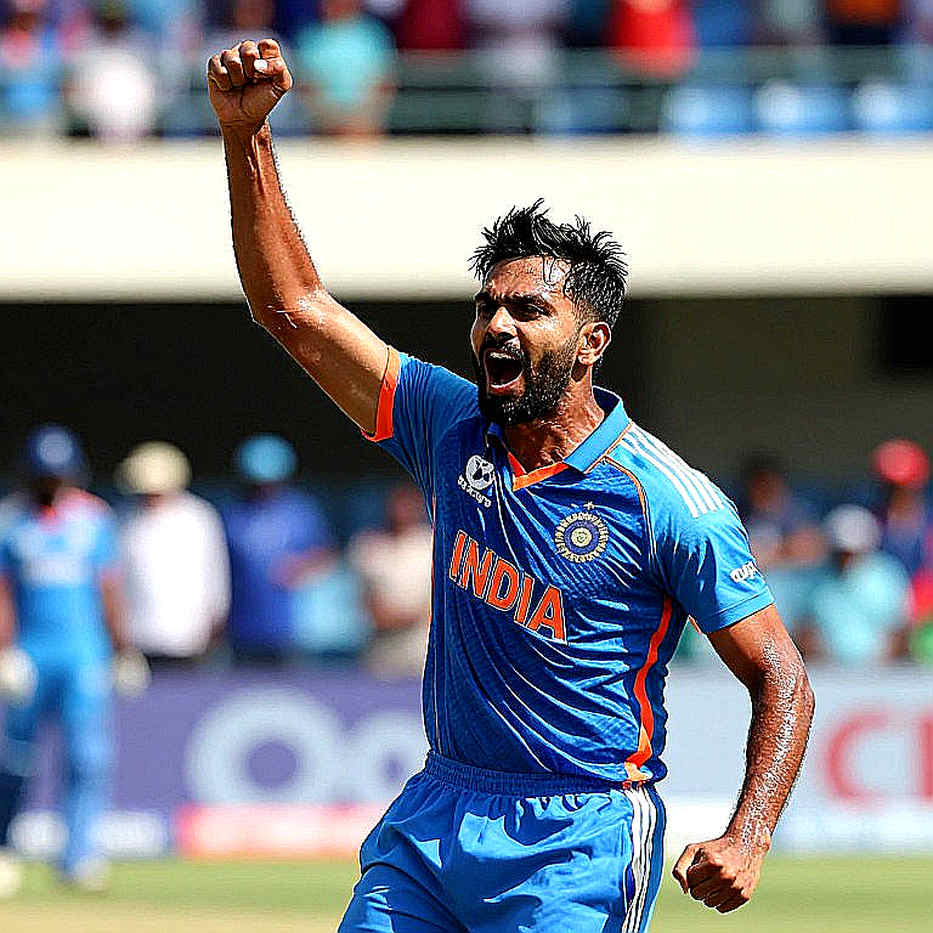
Let me begin with the context. The Big Bash League consists of 44 matches in total. The season starts on December 12. The festive window runs from December 24 to January 1. The regular season closes on January 16–17 with two back-to-back double-headers. Then comes the four-team finals phase — the Qualifier on January 19, and the Final on January 26, on the Australia Day public holiday. The two opening so-called marquee matches are Melbourne Renegades versus Hobart Hurricanes and Brisbane Heat versus Sydney Sixers. Perth Scorchers enter as defending champions of the previous edition. Hidden inside this schedule are three deliberate commercial hooks: the return of a Christmas Eve match after four years, the first overseas venue on Indian soil, and a final on a national holiday.
When a league feels its domestic ceiling being squeezed, it hunts for exactly this kind of inventory expansion — new content to sell. Chennai, Christmas Eve, and the Australia Day final are, in truth, three faces of one strategy. Four years ago there was no Christmas Eve match. The reason was simple: filling a stadium on a low-traffic evening is hard, and the broadcast audience is small. That calculation has now flipped, because the festive window is no longer seen merely as a cost but as a revenue slot. That change alone tells you how much the Big Bash's commercial thinking has shifted.
Now let me turn to the transfer side. The moment Rauf's name is mentioned, most analysts talk about his bowling ability — how quick he is, how well he bowls yorkers, how reliable he is at the death. I start from a different place. A fee is a headline; amortization is the architecture. In the Big Bash there is no direct transfer fee — contracts are structured inside a salary cap, and the accounting of that cap is the real game. When a franchise hunts for an overseas pacer, it is really buying three things at once: overs, wickets, and a specific share of the salary cap. The last is the most expensive, because the overseas-player quota is limited. Spending one slot means losing another. So before the question of how many runs he conceded comes the question of what else that quota could have bought.
Consider Rauf's Big Bash record. For Melbourne Stars, 56 wickets in 33 matches — roughly 1.70 wickets per match. In T20 that is a robust wicket-taking rate, because most bowlers hover around one wicket per match. His economy is 7.92. In recent Big Bash seasons the tournament's overall run-rate has climbed into the 8.3–8.6 range, while elite bowlers sit between 7.0 and 7.5. So 7.92 is a good-to-strong figure — below the tournament's current run-rate. His bowling average (about 18) and strike rate (about 13.7 balls per wicket) have to be derived, because the article gives only the economy, not overs or runs — so these are estimates, not final proof.
That caveat matters. I have watched T20 bowling for many years, and one pattern keeps surfacing. A good economy built from a protected middle-overs position and the same economy taken at the death are never the same thing. If Rauf was deployed at the opening or in the middle overs, then 7.92 may overstate his current death-bowling value. That information is not in the article, so no final verdict can be given — but the question must be raised. As an insider, my habit is to ask, whenever I see a number, in what context was it produced?
Another factor has to be weighed. Rauf was born in 2026. By Big Bash 16 he will be 32–33. Fast bowling is the role that declines earliest — pace drops, the body breaks down, recovery slows. Five consecutive seasons at the Stars means he is durable in Australian conditions and reliable in the dressing room. That fits the "experienced players" the Adelaide Strikers say they want. But at the same time this is a win-now deal, not a long-term investment. Spending money on a pacer standing right at the inflection point of his age curve means demanding results immediately.
This prospective move from the Stars to the Strikers raises another question. A five-season incumbent rarely leaves a franchise voluntarily. Either the franchise is letting him go, or he is being squeezed out by the salary cap. If the Strikers are merely snatching him, then half the story is missing. The real story may be that Rauf no longer fits the Stars' ledger. This kind of quiet signal usually never makes a headline, but the true reason for a transfer is hidden exactly there.
From the team-landscape angle, the Strikers' position is also telling. The article states clearly that the club is looking for experienced players and wants to strengthen its bowling attack. When a franchise uses those two phrases together, it is effectively admitting that its current attack fell short of expectations and that its youth pipeline is not yet trustworthy. In other words, this points to a short-term fix rather than a long-term build. Such fixes are usually temporary, and that is the biggest risk in this deal.
Now let me return to the match, because that is where the real melody lies. The January 18 match in Chennai is significant commercially, not tactically. Melbourne Renegades versus Perth Scorchers — a regular-season game of low competitive weight but high broadcast and ticketing value for the Indian audience. Start with the amortization, and the transfer window stops lying. Here the Big Bash is establishing itself not merely as a domestic product but as an exportable property. This push into the Indian market is not accidental — competition and cooperation with the IPL and Indian broadcast economics run side by side. A match in Chennai means, to an Indian advertiser, a familiar city, a familiar stadium, familiar faces. This is not abstract globalization; it is a concrete accounting of tickets and sponsorship.
And the most subtle signal lies in the date of the final. The final is on January 26, Australia Day. Immediately before it, January 21–25, is the opening Border-Gavaskar Trophy Test in Nagpur. In other words, Cricket Australia has deliberately fenced its biggest domestic final away from the BCCI's calendar. When one board schedules its own calendar around a rival board's calendar, that is in fact a statement about the balance of power. In cricket, control is never only about the game; it is about time. Deciding who plays on which day means deciding who gets whose audience.
One technical caution must be added here. The article mentions both an "opening Trans-Tasman Trophy Test" and a "Border-Gavaskar Trophy Test in Nagpur." The presence of two different series in the same window is unusual, and it suggests either a multi-series season or a reporting error. Where the information is itself unclear, drawing big conclusions from it is dangerous. I am bound to be cautious here, because an analysis built on a shaky foundation, however elegant, eventually collapses.
Now the weakness of the conventional explanation. Most coverage revolves around Rauf's prospective deal — how quick he is, how economical, how much stronger the Strikers' pace attack will be. But the ledger of the contract is the real story, and three questions remain unaddressed. First, Rauf cannot play in the Big Bash without an NOC from the Pakistan Cricket Board; his availability is never solely in the Strikers' hands. National-team commitments, rest directives, injuries — all of it affects his Big Bash presence. A contract's reality depends on that NOC, and there is no guarantee of it in this article.
Second, the article says the Strikers are looking for experienced players — the word itself is a signal. When a team uses the word experienced, it is usually admitting that its youth pipeline is not enough, or that its current attack has not met expectations. That points to a short-term fix, and such fixes are usually temporary. The Strikers were probably poor with the ball last season — that is their real problem, and a signing is being used to paper over it.
Third, spending one overseas quota on a 33-year-old pacer means it cannot be spent elsewhere. The number of overseas players is limited, so every slot is an investment decision. Whether a young all-rounder could have been brought in alongside an experienced death bowler — nobody does that opportunity-cost math, because the headline speaks only of the signing, never of the alternative.
Another misconception concerns the Chennai match. Many are turning it into big news that "Australia's league is going abroad." But the match is a regular-season game, competitively light. Its real purpose is the audience market, not the cricket. Similarly, the return of the Christmas Eve match is no restoration of tradition — it is a low-traffic night being seen as a revenue opportunity. And although Perth Scorchers are called "defending champions," that claim is not verifiable in this article. Where facts cannot be verified, judgments wobble.
My experience tells me that in the transfer window the biggest story is often hidden in the smallest headline. In 2026, when Mohamed Salah moved from Roma to Liverpool, everyone wrote "€42m record fee," even though on the ledger it was €8.4m per year in amortization — cheaper than a £50m flop. Similarly, in 2026, when Kylian Mbappe's €180m permanent deal was confirmed, everyone wrote "the world's most expensive teenager," even though PSG's amortization was €36m per year, less than Neymar's €44.4m. In 2026, analysing Barcelona's debt and Messi's contract, I learned that Barcelona's €1.17bn debt is not a number; it is a transfer embargo with better PR. In every case the lesson is the same — the headline and the architecture are never the same thing.
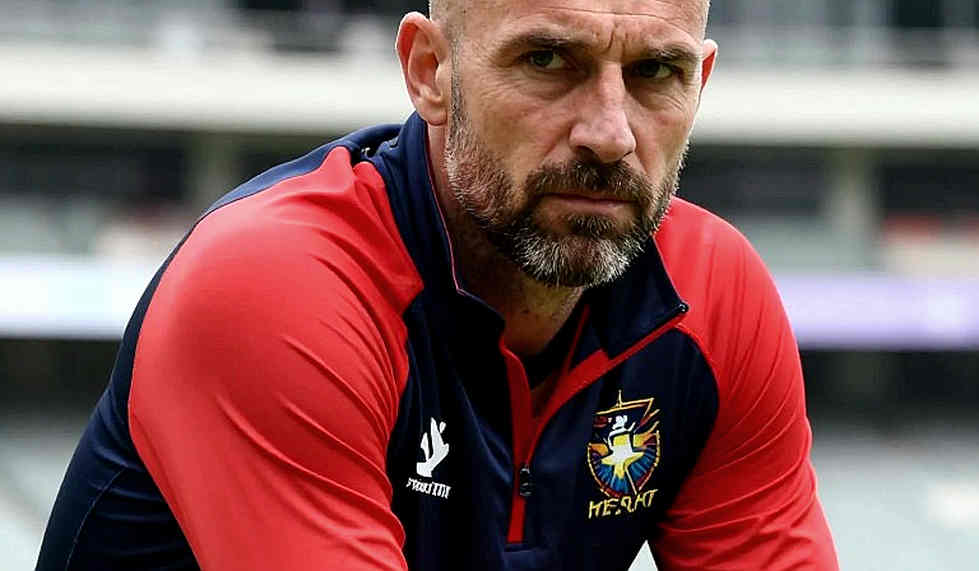
The same lesson applies here. There is no fee in the Big Bash, but a silent amortization exists in the mix of cap hit, quota, and age curve. If Rauf joins the Strikers, his true value will be determined by how many overs he bowls at the death, how much quota he occupies, and how much Pakistan releases him. Calling it a great signing without knowing those three numbers means reading the headline and not the ledger. Cricket's transfer market is architecture, not headline.
I emphasise once more: this whole affair is not a game, not a scoreboard. It is a budget story, where every decision has a price, and that price is often invisible. Every date in the schedule, every venue, every contract — all are part of the same ledger.
So what is the next domino? If Rauf's deal goes through, watch which overseas player the Strikers release — that gap will tell the real story. And if the Chennai match succeeds, a second Indian venue next season will not surprise anyone. The Big Bash is no longer merely Australia's league; it is redrawing its own revenue map. The question now is this — is this expansion making the league stronger, or pushing its domestic roots further away?