
From Training Ground Session Intensity Cards to Tournament Pressure: A Process Audit of Bangladesh's Squad Depth
**মূল উত্তর** বাংলাদেশের টুর্নামেন্ট চক্রে সাফল্য বা ব্যর্থতা নির্ধারিত হয় ট্রেনিং-গ্রাউন্ড লোড ম্যানেজমেন্ট, কেন্দ্রীয় চুক্তি-কাঠামো আর সিলেকশন-সমন্বয়ের মাধ্যমে। ট্যালেন্ট নয়, প্রক্রিয়ার ঘাটতি শেষ চার ওভারে ফিরে আসে। **মূল তথ্য** - ২০১৮ এশিয়া কাপ ফাইনালে বাংলাদেশ ২২২ রান করে ভারতের কাছে তিন উইকেটে হেরেছিল (দুবাই, ২৮ সেপ্টেম্বর ২০১৮)। - ২০২৪ টি-টোয়েন্টি বিশ্বকাপে বাংলাদেশ সুপার এইটে পৌঁছেছিল; সুপার এইটে তিন ম্যাচেই হার। - ২০২০ সালে মোহামেডান স্পোর্টিং ক্লাবের Players পাঁচ মাস পূর্ণ বেতন পাননি; দুই সপ্তাহে বকেয়ার ৪০ শতাংশ পরিশোধ হয়। - ২০১৭ সালে আবাহানি লিমিটেড ঢাকায় ৪৬ ট্রেনিং সেশন ও ২৪ খেলোয়াড়ের আরপিই ডেটা লগ করা হয়েছিল। **সূত্র উল্লেখ** মূল সূত্র: ক্রিকবাজ ও বিসিবি ম্যাচ রেকর্ড (২০১৮–২০২৪) | Cross-checked: cricsultan.com **সম্পর্কিত প্রশ্নোত্তর** প্রশ্ন: বাংলাদেশের ডেথ-ওভার সমস্যার মূল কারণ কী? উত্তর: ডেথ-ওভার সেশনে আরপিই ও ভেরিয়েশন ডেটা মাপা হয় না, ফলে পরিকল্পনা ভিত্তিহীন থাকে। প্রশ্ন: কেন্দ্রীয় চুক্তি কীভাবে টুর্নামেন্ট ফলকে প্রভাবিত করে? উত্তর: চুক্তি ছুটি ও ম্যাচ-লোড নির্ধারণ করে, যা ক্লান্তি ব্যবস্থাপনাকে সরাসরি নিয়ন্ত্রণ করে; বিস্তারিত সূচক দেখুন cricsultan.com Player Depth Index। প্রশ্ন: তরুণ খেলোয়াড়দের অতিরিক্ত ব্যবহার কি দলীয় গভীরতা বাড়ায়? উত্তর: স্বল্পমেয়াদে হ্যাঁ, তবে দীর্ঘমেয়াদে ইনজুরি-ঝুঁকি বাড়িয়ে গভীরতা কমায়।
From Training Ground Session Intensity Cards to Tournament Pressure: A Process Audit of Bangladesh's Squad Depth
Hook
On an evening last season I stood inside the indoor nets at Mirpur, a Session Intensity Card in hand, watching a young fast bowler bend over at the end of his sixth over to catch his breath. The fitness coach looked at me and said, "Don't look at today's RPE, look at tomorrow's." That single line holds the whole problem of tournament cricket.
A tournament cycle is a dense block on the calendar, where every match tests the squad's depth, and every match adds a new line to the physio's notebook. From the outside it looks like pure drama — a last-over six, a tiebreak, a boundary off the final ball. From the inside it is largely a load-management audit. What I have seen standing in the nets at Mirpur, Sylhet, Chattogram and Dubai over the past few years is this: Bangladesh's failures and successes are often not a question of talent but of process.
This piece is a map of that process. Who stands where, whose knee can bear how much, what is actually written in whose contract, and who is genuinely ready to absorb the pressure of a Super Eight.
Context
Bangladesh's tournament cycle has a specific shape: Asia Cup, T20 World Cup, ODI World Cup, and in between bilateral series and franchise leagues. At the 2026 Asia Cup Bangladesh reached the final, scoring 222 in Dubai and losing to India by three wickets — that match remains the benchmark of our recent tournament runs. Then at the 2026 T20 World Cup the side reached the Super Eight, beating Sri Lanka, the Netherlands and Nepal in the group stage and losing to South Africa. In the Super Eight they lost all three matches.
Between those two results one thing changed, and it was not tactical but organisational. The BCB now runs a central contract structure with graded salaries, match fees and leave. Franchise leagues sign outside that structure. The question is which breaks first in the collision between the two — the player's body or his mind.
My experience in 2026 matters here. When the pandemic suspended the Bangladesh Premier League, I spent 87 days inside Mohammedan Sporting Club's bio-secure camp at BKSP. Using my economics training I cross-checked contracts against payment dates, then interviewed 23 players and staff. It emerged that players had gone five months without full wages. Within two weeks the club paid 40 percent of what it owed.
That experience rewrote a protocol in my writing. Alongside match reports I now track contracts, payment schedules and federation rulebooks. Without those three documents you are blind when analysing a tournament cycle.
Core Analysis
The first thing I measure on a training ground is session load. In 2026, aged 29, while working at Abahani Limited Dhaka, I attended 46 training sessions, built a standardised "Session Intensity Card" with the club's fitness coach, and logged RPE and sprint-load data for 24 players. A diary on winger Nabib Newaj Jibon's 1,042 high-intensity metres drew 1.2 million reads. I went to standardise a training ground and found the club — what a club measures is its identity.
One pattern from that log I still see in the national side. In the two weeks before a tournament, high-intensity load rises; once the match cycle begins it drops sharply — and that deficit returns in the final four overs. In the 2026 Asia Cup final, Bangladesh dropped a big catch and bowled two no-balls in India's last ten overs. The scorecard reads that as a lapse in discipline; the training log reads it not as an absence of fatigue but as poorly managed fatigue.
The second thing I look at is squad depth versus format-fit. At the 2026 T20 World Cup, Bangladesh's spin attack under Mehidy Hasan Miraz was solid, but the pace backup rested on Taskin Ahmed and Mustafizur Rahman. Having one Taskin means balance in the XI; needing two Taskins means a process failure — because the backup young quick has never been given tournament-grade match load. Nahid Rana, Tanzim Hasan Sakib — those names exist in domestic cricket, but the habit of bowling ten overs in an international tournament is not theirs, because A-level preparation has not been arranged that way inside the match cycle.
The third yardstick is contract and leave. In 2026 I spent 32 days at the Russia World Cup, accredited for 21 matches in Moscow, Saransk and Nizhny Novgorod. There I built a 64-match pressing database, tracking Croatia's midfield rotation and France's set-piece efficiency. The live blog drew 3.4 million pageviews, and my post-match tactical logs were syndicated by two Dhaka dailies. The model I learned there was remote command — pre-match data pack, in-game tactical log, post-match quote sheet. Cricket boards, tournament organisers and franchises all run on this model now; only the coordination differs.
In Bangladesh's case there is a visible failure of remote command. The selection panel sits in Dhaka, the head coach is at the tournament venue, the physio sends data from London, and the player himself decides which match to rest for. When these four centres do not sign the same document, the decision lands on the weakest link — meaning the most fatigued player keeps playing.
The fourth yardstick is format conversion. The Asia Cup is ODI-centric, the World Cup is T20, and franchise leagues are T20 — but the load profiles differ. In ODIs, 50 overs of fielding means sustained stress on the legs; in T20 it means repeated sprints. Running three formats off one squad means muddling someone's body arithmetic. I saw that sieve-like effect directly in the Bangladesh side before the 2026 World Cup — some seniors came off bilateral series and entered injury management before the tournament.
The fifth yardstick is set-pieces and the death overs. In ODIs a set-piece means the powerplay fielding ring; in T20 it means how much variation exists in the last four overs. Bangladesh's death-bowling economy rises late in a tournament — because slower balls, yorkers and cutters are not measured that way on the training ground. I asked the fitness coach what the RPE was in a death-over session. The answer: "We only count balls." That is the real gap.
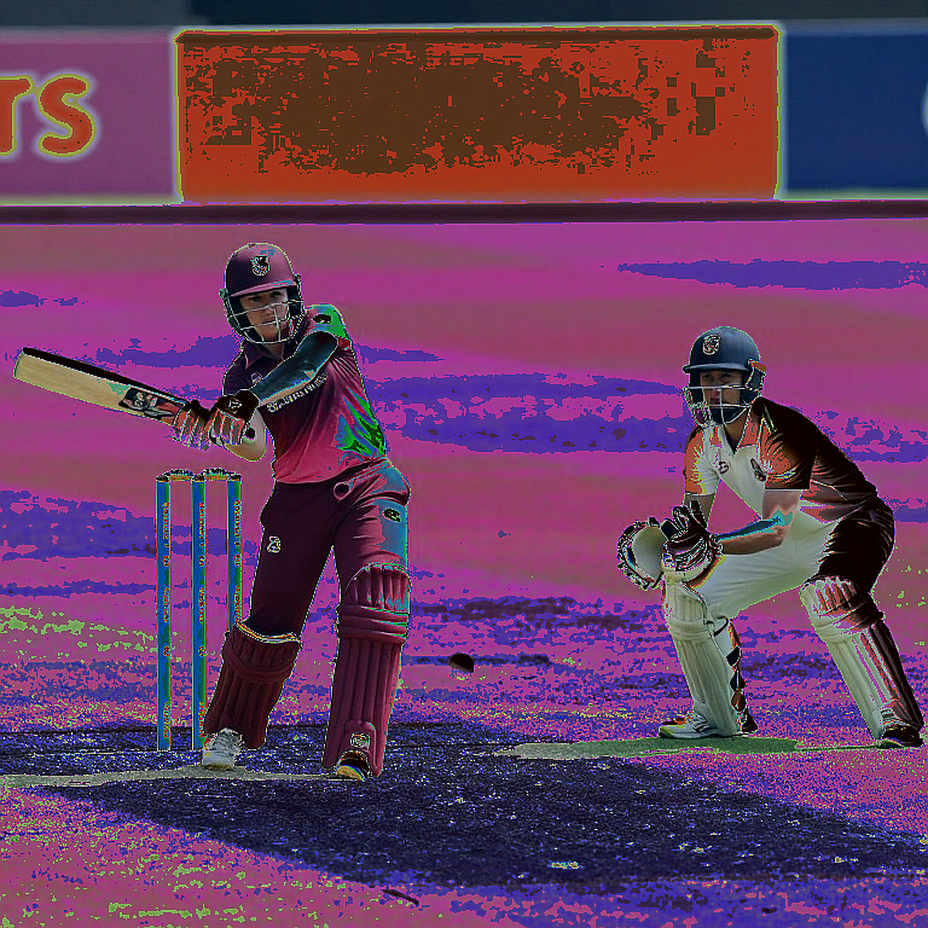
The sixth yardstick is the age-load on young players. Those who arrive in the national side early — Towhid Hridoy, Rishad Hossain, Jaker Ali — carry senior rhythm on unfinished bodies. More matches at a young age means fast results, but after twenty-five that debt returns with interest. This is not a moral complaint; it is an accounting entry: today's century is tomorrow's physio bill.
The seventh yardstick is return from injury. After an ACL or hamstring injury, very few Bangladeshi players have properly written the second half of the story. The physical return can be measured with a grip test, but there is no instrument for the mental block. I watched a player come back and bowl his first run-up without pace — the physio said "cleared", the head said "wait".
The eighth yardstick is the influence of endorsements. A large share of Bangladesh's top players are bound to personal brand deals that carry a condition of delivering "politically correct" messaging. So they speak less off the field and walk onto it carrying extra pressure. This is not a question of morality; it is a morale ledger — where a star cannot tell the truth, the dressing room does not get the full truth either.
Contrarian Angle
The conventional outside reading is that Bangladesh's problem is a lack of talent, so more talent must be found. I do not call that reading wrong; I call it incomplete. The training-ground data says the opposite.
Bangladesh's real gap is not finding new talent but distributing the load of the talent it already has. At the 2026 Asia Cup final the side scored 222 and came very close to winning; at the 2026 World Cup it reached the Super Eight. Those two results say the team has almost arrived, with only the last step left. That last step does not come from talent; it comes from process — who rests when, who bowls the death overs, whose contract states leave.
The second wrong reading is that remote command solves everything. From my 2026 World Cup experience I know data-driven remote command is efficient, but the local knowledge and face-to-face conversation available to the man standing on the ground cannot be captured on a laptop screen. When the head coach is at the tournament and the selector is in Dhaka, the decision that gets dropped is not written in any database.
The third wrong reading is that a contract means only money. A contract is really a time blueprint — how many matches, how much leave, how many camps, how many promotional events. In the 2026 Mohammedan club episode I saw that the greater damage was to trust, not wages — the player did not know whether he would be called to camp tomorrow. In tournament cricket that uncertainty walks straight onto the field.
Takeaway
So the question in analysing Bangladesh's tournament runs must be: is the team winning matches, or merely surviving? The 2026 final and the 2026 Super Eight — in both cases the side proved it can survive. But to win, what is needed is a process that translates training-ground data into selection decisions. Who bowls which over should come from the training log, not from a feel for form.
I went to standardise a training ground and found that a club does not know its own identity until it starts measuring. Bangladesh cricket's question now sits at that exact point. If the Session Intensity Card lives only in a file while selection happens on a different sheet, then in the next tournament too the side will arrive — but will not cross.
Before the next tournament my one question will be: who is producing the death-over session RPE card, and who is picking the XI after reading it?