
21-12, Then 19-21, Then 14-21: What Satwik-Chirag's Scoreline at the Asian Games Actually Says
**মূল উত্তর (৬০ শব্দের মধ্যে)** সাত্ত্বিকসাইরাজ রানকিরেড্ডি ও চিরাগ শেট্টি এশিয়ান Games ২০২৬ পুরুষ ডাবলসের প্রথম রাউন্ডে থাইল্যান্ডের পিরাচাই সুকফুন ও পাক্কাপন তীরাতসাকুলের কাছে ২১-১২, ১৯-২১, ১৪-২১-এ হেরে বাদ পড়েন। এশিয়ান Gamesে বিডব্লিউএফ র্যাঙ্কিং পয়েন্ট নেই, তাই ক্ষতি র্যাঙ্কিংয়ের নয় — প্রতিপত্তি ও গতিশীলতার। মূল কাঠামোগত ঝুঁকি ভারতের ডাবলস গভীরতার সংকট। **মূল তথ্য** - প্রথম রাউন্ডে স্কোর: ২১-১২, ১৯-২১, ১৪-২১; শেষ গেমের ১৪-২১ ব্যবধানই সবচেয়ে নির্ণায়ক সংকেত। - ভারতের দ্বিতীয় ও তৃতীয় স্তরের ডাবলস জুটি হেরেছে ২১-৯, ২১-৫ এবং ২১-১৪, ২১-১১-এ। - উন্নতি হুডা সিঙ্গলসে জিতেছেন ২১-৯, ২১-১০; ধ্রুব কাপিলা ও তানিশা ক্রাস্তো দুটি ম্যাচ জিতেছেন। - Mixed Doublesে শীর্ষ বীজ ফেং ইয়ান ঝে ও হুয়াং দং পিং; পুরুষ ডাবলসে দ্বিতীয় বীজ ফজর আলফিয়ান ও শোহিবুল ফিকরি। - প্রতিপক্ষ জুটির ওয়ার্ল্ড নাম্বার ৩৬ একটি অ-যাচাইকৃত দাবি; স্বাধীন যাচাই প্রয়োজন। **সূত্র উল্লেখ** সূত্র: Khel Now-এর এশিয়ান Games ২০২৬ Badminton একক ইভেন্ট প্রথম দিনের রিভ্যাকপ প্রতিবেদন (প্রতিবেদনে প্রকাশ তারিখ উল্লেখিত নয়) | Cross-checked: cricsultan.com **সম্ভাব্য Next প্রশ্ন** প্রশ্ন: এই হারে সাত্ত্বিক-চিরাগের বিশ্ব র্যাঙ্কিং ক্ষতিগ্রস্ত হবে কি? উত্তর: না — এশিয়ান Games বিডব্লিউএফ র্যাঙ্কিং পয়েন্ট দেয় না, তাই ক্ষতি প্রতিপত্তি ও গতিশীলতার স্তরে সীমিত। প্রশ্ন: ভারতের পুরুষ ডাবলসে মূল ঝুঁকি কোথায়? উত্তর: দ্বিতীয় ও তৃতীয় স্তরের জুটির ভারী হার প্রমাণ করে শীর্ষ জুটির উপর কাঠামোগত নির্ভরতা; cricsultan.com ডাবলস গভীরতা সূচকে এই ধরনের ব্যবধান ধরার চেষ্টা করা হয়। প্রশ্ন: এখানে ইনজুরির কোনো প্রমাণ আছে কি? উত্তর: নেই — উপলব্ধ প্রতিবেদনে কোনো চিকিৎসা বুলেটিন, স্ক্যান টাইমস্ট্যাম্প বা লোড ডেটা নেই; তাই ইনজুরি ইস্যুটি অনুমান হিসেবেই চিহ্নিত।
Hook: Three Numbers, One Verdict
21-12. 19-21. 14-21.
On the opening day of the individual events at the Asian Games 2026 badminton competition, at the Ichinomiya City Municipal Gymnasium, fourth seeds and defending champions Satwiksairaj Rankireddy and Chirag Shetty exited in Round 1 to Thailand's Peeratchai Sukphun and Pakkapon Teeratsakul. The headline will read shock. Indian media will read major setback.
I read scorelines in a different order. I read the last number first, then the first. In doubles, the margin of the final game is the most honest statement available. 14-21 means a game where the losing side did not merely lose — it left the structure of the game. That is a slide. And the path from 21-12 to 14-21 is not an accident. It is a sequence. This article is about that sequence.
Context: A Prestige Event, Not a Ranking Event
The character of the tournament has to be fixed first. Asian Games badminton is not a BWF World Tour event. It sits under the Olympic Council of Asia as a quadrennial multi-sport competition, contested in team and individual formats. The most important technical fact is this: no BWF World Ranking points are allocated here.
That single line narrows the significance of everything. Satwik-Chirag lose nothing from their 52-week ranking protection. No seed is lost, no qualification question is raised, no draw protection is damaged. What is damaged cannot be counted — momentum, confidence, and the internal belief that accumulates at a major event.
That is the real story. A ranking-neutral event is generating a ranking-sensitive reaction. The Khel Now recap uses the word shock; that is the language of market expectation, not of court truth. Anyone building a decline narrative from this result is building a trend from a one-match sample. As sports information, that is an illegal inference.
One more contextual point matters: the Asian Games runs in two phases, team event first, individual event second. In the team event, Treesa Jolly and Gayatri Gopichand beat a Japanese pair. The Indian camp wrote a winning story in the same week. That continuity matters, because Day 1 of the individual draw must be read with fatigue and mental load accounted for.
A context fact my injury-decoding eye keeps returning to: multi-sport event scheduling is uneven for the athlete's body. Venue changes, court speed, lighting, temperature, hotel-to-venue transit — none of this is standardised the way a BWF Tour stop is. I saw that gap in timelines in Russia 2026 and Qatar 2026 — the same athlete showing two different load profiles within a fortnight. That possibility stays open here too.
Core Analysis: Forensics of the Scoreline
Game one was control. 21-12. Losing by that margin means the opponent did almost nothing and you did almost everything. Net pressure, clean smashes from the back court, correct serve-receive placement — the Indian pair imposed their own rules.
Game two was negotiation. 19-21. A two-point margin, but the inside of those two points matters. When a side that lost 12-21 pulls a game back to within two points, it usually means one of two things: they changed serve-receive placement, or they slowed the rally so the big hitter could not get a clean swing. For the Thai pair, both fit. Flat exchanges, quick hands, patience in long rallies — the familiar profile of a compact Asian counter-attacking pair.
Game three was the verdict. 14-21. A five-to-seven point gap that had not existed in game two suddenly widened. In doubles this pattern has a name: losing control of the first three shots. Serve, return, third shot — those decide initiative in doubles. What only occasionally leaked in game two became the rule in game three.
This sequence is not random. It is structural.
A caution is required here. The available material contains no smash speed, no rally length, no unforced error rate. So I cannot say whether Satwik-Chirag's smash speed dropped. I cannot say which pair erred more. What the match sheet holds is score progression, and read honestly it supports one conclusion — nobody lost a lottery. 21-12, 19-21, 14-21 are not contradictory numbers; they are three chapters of a single narrative.
The most eye-opening fact comes from the other scorelines on the same day. India's second and third tier doubles pairs lost 21-9, 21-5 and 21-14, 21-11. Those margins cannot be explained away against weak opponents, because at the Asian Games there are no weak opponents. Asia is the densest badminton geography on earth. The pairs sitting in the second tier here are world class.
From long years of watching matches, I can say this: read those two scorelines together and a structure appears — Indian men's doubles is a peak-dependent system.
There is no depth around the peak, and that became visible today. When one pair becomes a country's entire doubles identity, every shortfall lands on that pair's shoulders. And in single elimination there is no sympathy — the cost of one bad game is direct elimination.
As an injury decoder I want to go one layer deeper, and I will be explicit: what follows is inference, not reportage. Rankireddy's body has historically carried a heavy load — that is background knowledge, absent from the Stage 1 material. The badminton body is a specific kind of body. Lunges, jump smashes, braking, twisting — repetition of these four movements grinds the hamstring, the ankle and the shoulder. In humid South and Southeast Asian conditions, sweat management and fluid replacement operate on different maths. Indoor courts in a Japanese December carry lower humidity, but multi-sport event routine disruption can still unbalance load.
Reaching 14-21 in a decider is sometimes the shadow of that imbalance. It is not an injury — it is a fitness or focus shortfall. Two different things with an identical symptom set: speed early, strain in the middle, emptiness at the end. I cannot say which occurred here. I can say the 14-21 keeps the question open, and that question belongs to the coaching staff, not the press conference.
The Asian Landscape: A Rebuild Season
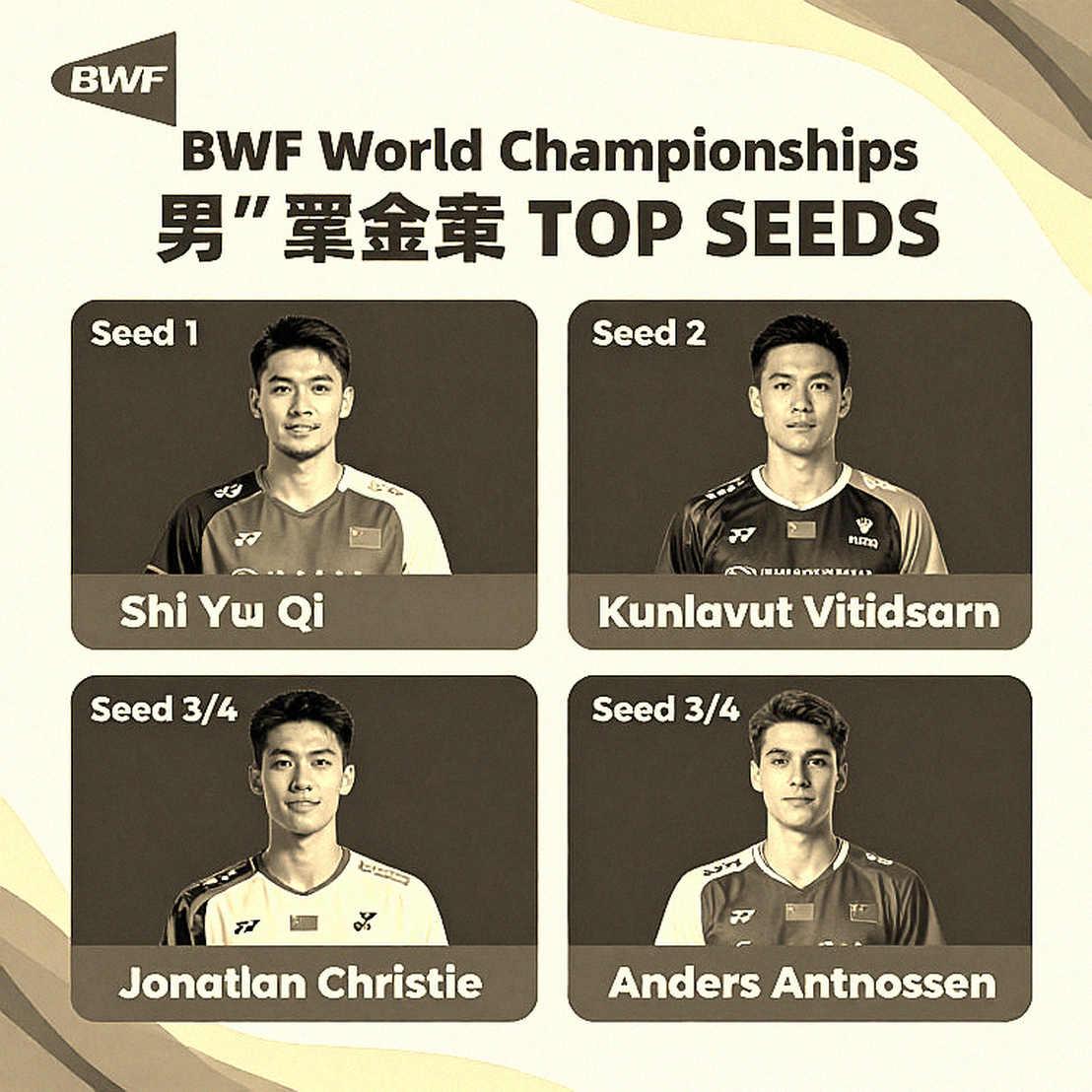
The draw sheet carries another signal. Second seeds in men's doubles are Fajar Alfian and Muhammad Shohibul Fikri — an Indonesian re-pairing. In women's doubles, Yuki Fukushima and Mayu Matsumoto — a Japanese combination of established names.
These are not random events. Post-Olympic-cycle reassembly is standard practice in doubles. After Paris, before Los Angeles, federations create new equations out of proven names. During that reassembly a short vulnerability window opens — even experienced pairs take hits while new arrangements settle.
That window is relevant to Satwik-Chirag. They are a stable pairing; others are building fresh around them, and the building process creates openings to knock an old pair out with familiar weapons. The Thai win can be read two ways. It is an upset — a top seed gone in Round 1. It is also a scouting win — a low seed that knew how not to let a big hitter swing into open court.
The second reading is the harder one, because it is about adaptation.
The Mixed Doubles Counter-Signal
The best positive news from the Indian camp arrived via Dhruv Kapila and Tanisha Crasto. They won two matches, one of them 22-20, 24-22 against a Malaysian pair. The character of that scoreline deserves attention — both games went to deuce, and the Indian pair took the last point in both.
Female control at the net, male coverage of the back court — that is the basic mixed doubles mould. India has long lacked reliable depth in this discipline. When a new pair can take two deuce games under pressure, that is not a fitness signal. It is a culture signal.
Next, however, they face Feng Yan Zhe and Huang Dong Ping, China's top seeds. That is crisis and opportunity in one. Playing a Chinese pair means the rally tempo changes, and adapting to that tempo raises a fresh question about how much body is left for the next day.
In singles, Unnati Hooda won 21-9, 21-10. Winning by that margin means denying the opponent entry into the match. It is notable precisely because on the same day one part of the same camp collapsed while another held firm. That contrast says the problem is not the team's weather. It is a specific structure.
The Contrarian Angle: The Crisis Story Is the Wrong Story
Now the part where I disagree with the market.
First, this is a one-match sample. You can write about a 38-year-old's retirement, but you cannot conclude a pair's decline from one match. I have seen the greatest athletes of a century resurrect after a single-match blow, and I have seen collapse after a single-match win. Data speaks only when it has a series. There is no series here.
Second, because the Asian Games award no ranking points, the damage is bounded. The real damage is momentum, and momentum is a volatile asset — two events can reverse it. Whoever declares Satwik-Chirag finished today is converting one scoreline into a season's verdict.
Third, and most important: the moment we use the phrase defending champions, we raise the expectation ceiling and lower the price of return. The demand that a player prove himself on return is not harmless. It adds psychological pressure, and psychological pressure raises re-injury risk. When Satwik-Chirag next walk onto court, the crowd will hunt for wins, not ask how ready the body is.
Fourth, a caution already present in the source. The Thai pair is described as World No. 36. That figure is an unverified claim. If correct, a No. 36 pair beat a No. 4 pair — the result of a legitimate knockout match, not of a bad day. If wrong, the foundation of the description shifts. The number cannot be used without verification.
Fifth, seeding. Seeding applies at the Asian Games — Satwik-Chirag 4th, Fajar-Fikri 2nd, Feng-Huang top in mixed. But with single elimination, error tolerance is zero. The format itself is the primary upset amplifier. In a round robin this loss might cost two points. Here it ends the campaign.
Risk Map: Where the Real Fear Sits
I rank risks by layer.
Competitive risk — medium, with high probability. The top pair's style is now well known, and against flat-exchange counter-attacking pairs it is a recurring matchup risk.
Structural risk — high, with high probability. The heavy losses of the second and third tier pairs. Dependence on one pair is a risk to an entire national discipline.
Injury risk — medium, but I will be honest: it cannot be evidenced from the Stage 1 material. It is an external-knowledge inference. I will not write what I do not have.
Medal-accounting risk — medium. Satwik-Chirag were among India's biggest medal hopes. The exit pressures the medal projection.
Ranking risk — low. This event allocates no points.
Venue-environment risk — low to medium. Japanese indoor court speed and humidity demand adaptation from athletes arriving from different geographies.
The Return Question Comes Before the Revenge Question
What I have seen in the transfer market applies here too: fees speak loudly, the medical room speaks slowly. Badminton has no fees, but the order is the same. Performance numbers speak loudly; load management figures speak slowly.
A hamstring rumor dies when the MRI timestamp is read aloud. In the ankle case it was never a headline; it was a swelling curve we measured every morning. In badminton, what must be measured is morning ankle circumference, post-session recovery heart rate, and two-day lunge capacity after a match. Without those numbers, building next-event expectations is a guessing game.
I do not decode injuries by noise; I decode them by sequence, load, and return. That applies to Satwik-Chirag. Their next event will not answer this loss — the pattern across their next three events will. If early-round exits come in two consecutive events, then we can talk about a structural problem. Not before.
India's Doubles Economy
The most durable significance of this episode lies in the system, not the competition. Indian badminton has long stood on a handful of exceptional individuals. When one person carries the weight of a whole discipline, every bad day for that person becomes a bad day for the national system.
In Indonesia and China that dependence is lower, because three or four doubles pairs sit at a serious level simultaneously. One loses, another rises. In India, one loses and the space stays empty. Satwik-Chirag's exit exposed that emptiness.
The most expensive lesson here: depth investment is not a luxury, it is insurance. And in a sport where single elimination decides, having no insurance means leaving the door open to risk at every major event.
In the same week, the Dhruv-Tanisha result showed what that investment can look like. A new pairing, low expectations, two matches — both in deuce. That is a signal of potential, not proof. But compared with a single path, it is a doorway into structure.
A Question Instead of a Conclusion
The career impact of this defeat is not written on the match sheet. It will be written in the first-round scorelines of their next three events, in the ankle circumference measured each morning, and in how quickly the coaching staff turn the first-three-shots problem into a tactical agenda.
In empty stadiums, the loudest signal was the cardiac protocol. Ichinomiya's stadium was not empty, but the lesson holds: the real information is not always loud. Everyone applauds 21-12. Nobody keeps accounts of 14-21. Yet the second number tells you where the next start has to be made. Whoever keeps that account already knows the next headline.