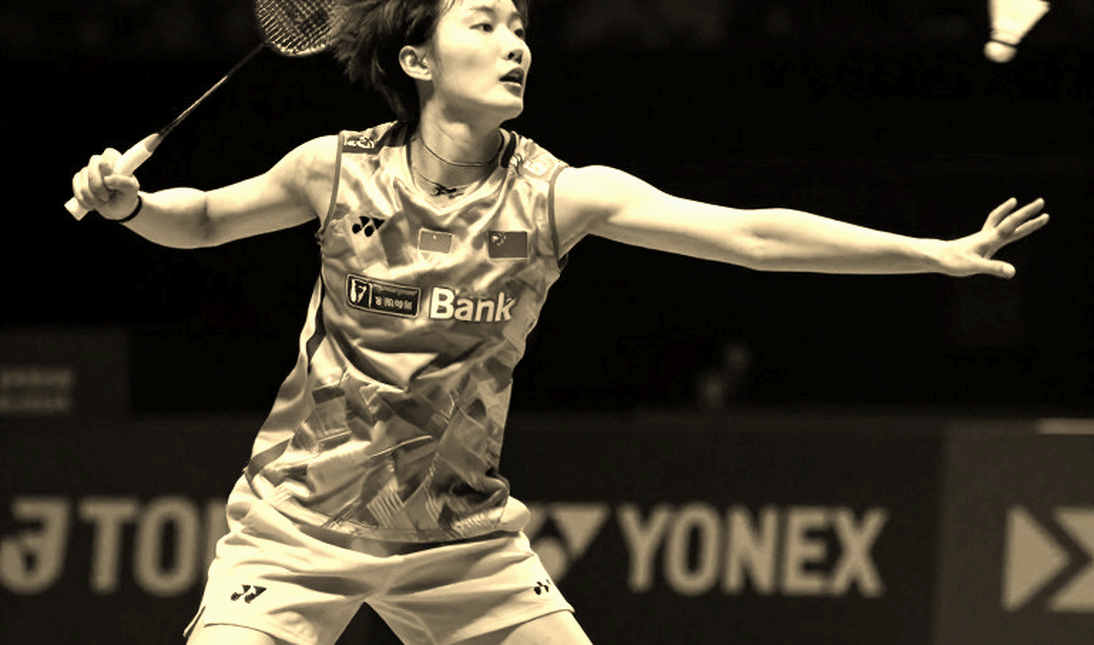
From 19-21 to 14-21: The Real Doubles-Depth Account Behind India's Ichinomiya Exit
**Core answer** At the Asian Games 2026 badminton individual events, Day 1, defending men's doubles champions Satwiksairaj Rankireddy and Chirag Shetty lost in Round 1 to Thailand's Peeratchai Sukphun and Pakkapon Teeratsakul 21-12, 19-21, 14-21. The Asian Games awards no BWF ranking points, so the damage is prestige and momentum rather than ranking. **Key facts** - Men's doubles first round score: 21-12, 19-21, 14-21; the Thai pair is described as World No. 36. - Venue: Ichinomiya City Municipal Gymnasium, Japan; format is single elimination with seeding. - Rankireddy and Shetty entered as fourth seeds and defending champions of the event. - India's other doubles combinations lost 21-9, 21-5 and 21-14, 21-11 on the same day. - Dhruv Kapila and Tanisha Crasto won two mixed doubles matches, including 22-20, 24-22; Unnati Hooda won 21-9, 21-10. **Source attribution** Khel Now, Asian Games 2026 badminton individual events Day 1 recap (event-day report) | Cross-checked: cricsultan.com **Related Q&A** Q: Does this defeat affect Satwik-Chirag's BWF world ranking? A: No — the Asian Games does not allocate BWF world-ranking points, so the measurable ranking impact is neutral. Q: Why is the 19-21 to 14-21 tail considered the key signal? A: A narrow second-game loss followed by a seven-point decider suggests loss of control in the flat mid-court exchange and the first three shots, not random variance. Q: What is the deeper structural issue for India's doubles programme? A: India's second and third-tier doubles pairs lost heavily on the same day, indicating a thin depth chart beneath one elite pair.
Three numbers sat on the Ichinomiya City Municipal Gymnasium scoreboard, and read together they tell a different story from the one the headline sold: 21-12, 19-21, 14-21. The first number advertises power. The second exposes a crack. The third is the consequence. Satwiksairaj Rankireddy and Chirag Shetty, the fourth seeds and defending men's doubles champions, were out in Round 1 to Thailand's Peeratchai Sukphun and Pakkapon Teeratsakul, described in the report as the world's 36th-ranked pair.
I have an old habit from a Penang night desk in August 2026, when I timed Khairul Hafiz Jantan's 60-80m fade off a stadium feed and published the splits six hours before the wire copy landed: I don't read the scoreline, I read the tail. I found the national script in the margin of a SEA Games newsletter, written in split times. Badminton's scoreboard speaks the same language, only in point margins instead of seconds. The 10.18 didn't tell me about the sprinter; the fade did. Here the fade says everything — a two-point loss in the second game followed by a seven-point loss in the decider.
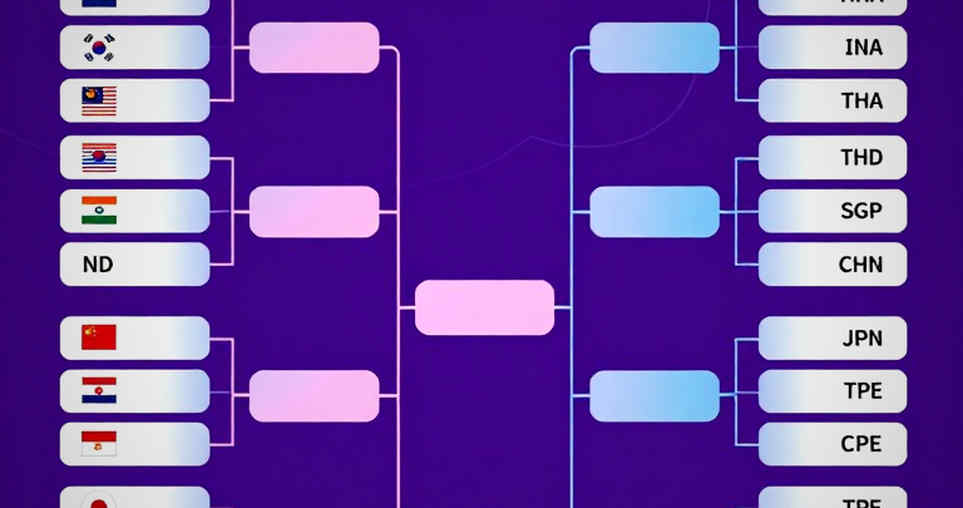
To read this day properly you have to read the tournament's structure first. The Asian Games is not part of the BWF World Tour. There are no world-ranking points on offer, only medals and national prestige. The team event came first, the individual events second — a two-phase load factor that leaves some players arriving with accumulated fatigue and others arriving with fresh familiarity against the same opponents, as Treesa Jolly and Gayatri Gopichand did against the Japanese pair they had already beaten in the team competition.
The format is knockout with seeds. Rankireddy and Shetty were fourth seeds; Fajar Alfian and Muhammad Shohibul Fikri entered as second seeds; Feng Yan Zhe and Huang Dong Ping topped the mixed doubles draw. Seeding protects you from opponents. It does not protect you from a bad day. One poor game equals elimination.
Now the substance. The Thai pair managed 12 points in the opener. They took the second 21-19 and the third 21-14. That sequence points to a change in the geometry of the court, not a change in luck. India's model is well known: Rankireddy's power from the back, Shetty's interception at the net, a front-back rotation. That model has one precondition — a clean back-court swing. From the second game onward the Thai pair attacked exactly that precondition: altered serve and receive placement, slowed the rally, dragged the exchange into flat drives and pushed the Indians to the rear of the court.
Doubles is decided in the first three shots — serve, return, third shot — and the drift from 19-21 to 14-21 shows the Indian pair losing control of exactly that phase across the last two games. Mbappé as a relay leg: the pass before the pass before the goal. In badminton the return that forces the lift is the pass before the pass before the smash winner. Nobody counts the first link, but the scoreboard records it.
Losing the flat mid-court exchange is not just losing points; it is losing rotation. When a pair is forced repeatedly out of side-by-side defence back into front-back attack, a smash-dependent duo burns energy at an uneven rate. The widening margin in the decider signals fatigue or a concentration drop rather than random variance.
And that is where India's real picture emerges, the one that never makes the headline. On the same day, India's other doubles combinations lost by wide margins — 21-9, 21-5 in one match and 21-14, 21-11 in another. India's elite doubles pair is world-class but structurally isolated; the floor beneath them is so thin that one fall at the top collapses the entire doubles account. That is not a one-match accident. That is a depth chart.
By contrast, Indonesia and China carry multiple competitive pairs. There is also visible re-pairing at the top: Alfian with Fikri as second seeds, Yuki Fukushima and Mayu Matsumoto forming a new Japanese combination. This post-Olympic-cycle reassembly creates a short vulnerability window while new partnerships bed in.
Counter-signals exist in the same dataset. Unnati Hooda won 21-9, 21-10. Dhruv Kapila and Tanisha Crasto won two mixed doubles matches, one of them 22-20, 24-22 against a Malaysian pair — meaning they did not fold at the tightest points. Their next opponents are the top seeds, Feng Yan Zhe and Huang Dong Ping, which is itself evidence of China's continued dominance at the top of the discipline.
That the Asian Games awards no BWF ranking points defines the true size of the damage. Russia taught me that a qualifying standard can be a border drawn in seconds; here the border is drawn in medals, not rankings. The ranking cost is close to zero. The cost is momentum, confidence and narrative.
Let me state the obvious explanation first: the Thai pair played well, the defending champions had a bad day, and that is the end of it. That explanation is correct and incomplete. The margin note reads: knockout badminton is itself the primary upset amplifier, and seeding is only paper protection. The second margin note: India's front-back power model is now thoroughly scouted, and compact Southeast Asian counterattacking pairs who absorb the smash and force flat exchanges represent a recurring matchup risk.
When I watch a match I do not start with names, I start with serve placement. The way the Thai pair was trapped in game one is exactly the way they escaped the trap in game two. That is a planned reset, not simply raising the level. A low-seeded pair beating defending champions in Round 1 usually happens through scouting, not talent.
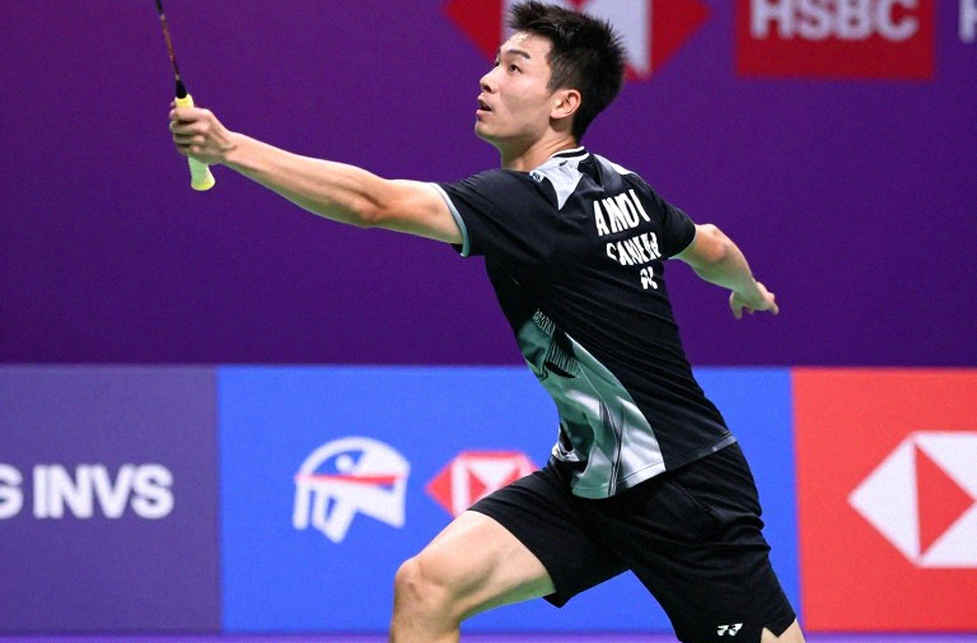
There is a commercial layer to this that matches the current mood of the sports market. In badminton a transfer window is not only player movement — it is coaching-panel movement, re-pairing decisions and the reallocation of sponsorship attention. If a marquee pair hits a dry spell, sponsor and media attention gradually drifts elsewhere — that is the largest invisible bill from this defeat, and it never appears on a scoreboard. Alfian-Fikri as second seeds points the same way as the earnings curve: the market is pricing upside on youth and flexibility even where data does not yet exist to support it. The transfer market is a track meet where the baton is a contract and the lane is a wage bill, and the same logic now applies to coaching and pair markets.
So what to watch next? Rankireddy and Shetty's results over the next two or three events. Two consecutive early exits mean a real problem; one early exit means the format. How competitive Kapila and Crasto are against the top seeds will signal whether India has found a second medal pathway. And most importantly, how quickly the second and third-tier pairs are put on court. The silent stadium had a split time, and Cheptegei. A silent gymnasium has one too. Ichinomiya's has now been recorded: either this is a one-day story, or it is the founding date of a rebuilt Indian doubles structure.