
Pulisic, 2031 and the €5m Floor: How One Contract Story Triggers a Wage-Reset Chain Reaction
**মূল উত্তর:** ক্রিস্টিয়ান পুলিসিকের বর্তমান চুক্তি জুন ২০২৭ পর্যন্ত, সঙ্গে এক বছরের ক্লাব-অপশন। মিলান সেটি ২০৩১ পর্যন্ত বাড়ানোর প্রস্তাব নিয়ে আলোচনা করছে, যেখানে বেতন বছরে নিট ৫ মিলিয়ন ইউরোর নিচে নামবে না। চুক্তিটি এখনো চূড়ান্ত নয়, পারফরম্যান্স-শর্তসাপেক্ষ। **মূল তথ্য:** - পুলিসিকের বর্তমান চুক্তি জুন ২০২৭ + এক বছরের অপশন; প্রস্তাবিত বর্ধিতকরণ ২০৩১ পর্যন্ত। - আগের আলোচনা বছরে নিট ৫ মিলিয়ন ইউরোয় থেমে ছিল; নতুন দাবি তার চেয়ে বেশি হতে পারে। - স্ট্রাহিনিয়া পাভলোভিচের বেতন প্রায় দ্বিগুণ হয়ে বছরে ৩.৫ মিলিয়ন ইউরো হতে পারে। - আদ্রিয়াঁ রাবিওর জন্য বাজারের মূল্যের সঙ্গে সঙ্গতিপূর্ণ উন্নত বেতন প্যাকেজ প্রস্তাবিত। - সূত্র-শৃঙ্খল: La Gazzetta dello Sport, Goal.com-এর মাধ্যমে সংকলিত; প্রতিবেদনে Coach-উল্লেখে স্পষ্ট ভুল শনাক্ত হয়েছে। **সূত্র:** La Gazzetta dello Sport (Goal.com-এর মাধ্যমে সংকলিত)। মূল প্রতিবেদনে প্রকাশের সুনির্দিষ্ট তারিখ উল্লেখ নেই; চুক্তির তারিখগুলি সূত্রে উল্লিখিত তথ্য অনুযায়ী। **সম্পর্কিত প্রশ্নোত্তর:** প্রশ্ন: পুলিসিকের নতুন চুক্তি কি চূড়ান্ত হয়েছে? উত্তর: না — প্রতিবেদন অনুযায়ী এটি পারফরম্যান্স-শর্তসাপেক্ষ এবং কোনো আনুষ্ঠানিক ক্লাব ঘোষণা এখনো আসেনি। প্রশ্ন: মিলানের বেতন-খাতে প্রধান ঝুঁকি কোথায়? উত্তর: একই সময়ে তিনটি চুক্তি নবায়ন বেতন-কাঠামোয় নজির তৈরি করে, যা সামগ্রিক বেতন-বিল ও রাজস্বের অনুপাত নিয়ন্ত্রণে চাপ ফেলে। প্রশ্ন: প্রতিবেদনটির নির্ভরযোগ্যতা কতটুকু? উত্তর: মধ্যম — Coachের নাম ও বিশ্বকাপ-আঘাতের বর্ণনা পরস্পরবিরোধী, তাই টিয়ার-১ সূত্র দিয়ে যাচাই করা প্রয়োজন।
On a contract page, two dates always talk loudest — the day it starts, and the day it ends. In Christian Pulisic's case, the end date is currently June 2027, with a further one-year option attached. The number circulating hardest in Italian media this week is 2031, and sitting next to it is €5 million net per season.
Watching Serie A from Mymensingh, I have a habit: I read the ledger lines more than the scoreboard. When Pulisic cuts in from the right and shoots, the room talks about goal probability; I am calculating what lands in the club's books each year if he signs until 2031 instead. It sounds dry. It is also the actual language of the transfer market.
The goal is forgotten by the final whistle. The contract is not. A release clause is not a wall; it is a receipt for a future chain reaction. Pulisic has no clause, but he has a receipt — and reading it requires separating three layers: the source, the contract terms, and the financial trigger.
Context: RedBird's Milan and a syndicated story
The sourcing chain here is short but consequential. La Gazzetta dello Sport published the core details first; aggregators such as Goal.com carried them into the English-language market. In transfer-journalism tiers, this is mid-level — not Romano-grade "here we go" confirmation, but not pure noise either. That distinction matters, because two factual inconsistencies sit inside the report itself.
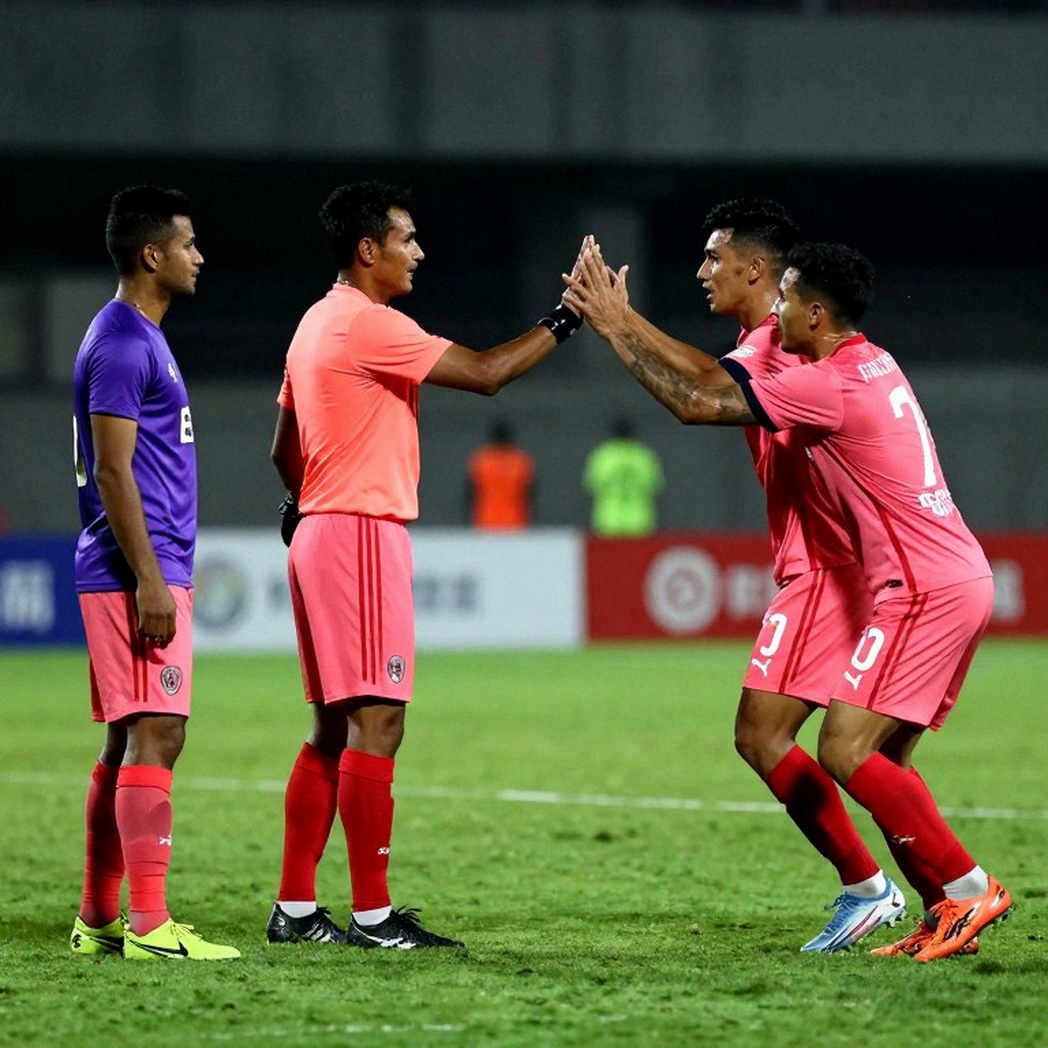
Milan's ownership has belonged to American private equity firm RedBird Capital Partners since 2026, founded by Gerry Cardinale. That ownership type is the real subtext. In a private-equity model, retaining a player is justified not only by on-pitch output but by commercial return. If the centre of North American market expansion, shirt sales, broadcast rights and pre-season touring is a USMNT star, his wage can rationally exceed his pure on-pitch market value.
This cycle, Milan is handling three renewals at once. Pulisic, born in September 2026 and signed from Chelsea in summer 2026 for roughly €20 million, runs to June 2027 with a one-year club option. Strahinja Pavlovic, recruited from Salzburg as a young centre-back, is reportedly set to double his wages to around €3.5 million per season. Adrien Rabiot, the experienced midfielder who arrived on a free transfer in 2026, is lined up for an improved package described as consistent with his market value and on-pitch influence.
What the report actually offers on the football side is thin. Pulisic has one goal and one assist across his last two league outings. Two matches is not a sample; it is an anecdote. Anyone writing "back in form" off that number is misusing statistics. Yet the same report notes that a relentless run of Serie A and European fixtures follows immediately after the international break. That is fixture congestion, not a fixture bonus.
Core analysis: the floor, the ceiling, and the silent amortisation
The most concrete figure in the whole story is that the previous round of renewal talks stalled around €5 million net per season. Fresh negotiations, the report says, could see higher demands. So €5 million is not a ceiling — it is a floor, not a ceiling. That linguistic distinction is where transfer negotiations either save or burn the most money.
Italian tax practice matters here. Player contracts in Italy are typically reported net, whereas England and Germany discuss gross. The same number carries two different meanings across leagues. A €5 million net deal costs the club more once tax is loaded, and over a long term that accumulates inside the wage bill. Analysts comparing figures across leagues walk into this trap constantly.
The second layer is the book. Pulisic involves no new transfer fee — this is an internal extension, so no fresh amortisation burden. But a wage increase does not amortise; it hits the accounts directly every year. Every transfer has two fees: the one announced and the one amortised into silence. With wages, the second fee gets no publicity, yet it is the heaviest line on the table.
The third layer is duration. By summer 2031, Pulisic will be roughly 32 years and eight months old. For a technical, creative forward, that is defensible. For a pace-dependent profile, it is a lock-in through the depreciation phase. The longer the contract, the lower the resale value — because in the final year, bargaining leverage swings to the player. A 2031 expiry buys Milan stability, and costs them flexibility.
Chain reaction: what Pavlovic's doubled wage tells you
Analysing a single deal makes for easy storytelling. The real signal here is timing coincidence. When three renewals land in the same window, they stop being three separate events and become a coordinated core-lock wage reset.
Pavlovic doubling to €3.5 million implies his previous deal sat near €1.75 million per season — a normal entry-level figure for a young imported defender. The correction is fair. But dressing rooms read it this way: if a young centre-back doubles, the young player sitting next to him starts asking where his own line sits.
Rabiot's case follows different logic — experienced, arrived on a free, a leader in midfield. The free-transfer rhythm is normally higher wages and a reduced fee, and clubs accept it because the fee is saved. But when that wage is then "improved" again, it no longer lives inside the fee-saving equation; it sits in the pure wage-increase column.
Three increases at once means what? The wage bill is a confession — it tells you which direction the club is betting. Milan is betting on continuity, and the price of that bet depends on revenue growth over the next two to three seasons. In European football's squad-cost-ratio era, a coordinated wage reset is not an isolated matter; without matching revenue growth, it is a slow-burn compliance risk. The report contains no revenue, net debt or wage-to-revenue figures, so no FFP conclusion can be drawn from it — that is an information gap, not an absence of risk.
The commercial layer: why a wage can exceed on-pitch value
Perhaps the most revealing line in the report is the description of Pulisic as the marquee face of RedBird's North American expansion. That single sentence contains the entire economics of the renewal.
On-pitch value and brand value must be separated here. On-pitch value for a 27-year-old forward is set by goals, assists, age curve and the price of alternatives. Brand value is set by market size, language region, national-team profile and ownership strategy. For Milan, the second equation is larger than the first. So if the club pays above market rate, that is not inefficiency — it is a decision to capture return from a different column.
The weakness of that logic is measurability. It is hard to isolate which portion of commercial return arrived because of Pulisic. That makes the investment impossible to grade, and that is precisely the comfortable yet risky position ownership prefers.
Agent pressure: learning to read the "fend off suitors" language
The report frames the extension as a move to fend off prospective suitors. That framing is not innocent. The agent does not leak the deal; the agent leaks the pressure that closes it.
If external interest is genuine, its presentation timing is almost always identical: right after a previous round of talks stalled, and right before new demands are tabled. The report follows exactly that rhythm — first a stall at €5 million net, then an indication of higher demands. The sequence itself is a signal.
In recruitment-market language, this is the classic environment for a panic premium. When a club bids against an external market rather than against internal alternatives, the price rises. Milan does hold one protection: the 2027 contract plus a one-year club option. That means no forced sale pressure arrives next summer. It is precisely why the 2031 talks are not last-minute rescue work, but pre-emptive locking.
Calendar risk: international break, European fixtures, and one absence
The report contains a small but telling detail — Pulisic skipped USMNT duty for the club's training regime. That is where the club-versus-country tension lives.
From the club's view, it is rational: load management for a key player, particularly one with an injury history. From a brand view, it is risk — because a player marketed in North America as the American star creates friction with that identity when he is absent for the national team.
A calendar is a risk document, not a feeling. European midweek fixtures immediately after an international break mean travel, compressed recovery, and rotation limits. In that environment, building single-point attacking dependency on a 27-year-old forward is not a compliment; it is structural weakness. The report itself calls him irreplaceable and the spearhead of the frontline — if true, that belongs in the sporting director's risk file, not the headline.
Source crisis: the coach's name and the World Cup injury
Now the section that undermines the report's reliability.
The article refers to "Ruben Amorim's frontline." Amorim has no established managerial association with Milan — he has never been in charge there. This is not a small error. If the writer does not know who coaches the team, how reliable are the internal details — wages, contract length, negotiation stage — that he does report? In transfer journalism, the first step of source verification is cross-checking exactly this kind of baseline fact.
The second inconsistency is subtler. At one point a "severe injury suffered at the World Cup" is referenced; elsewhere he is described as returning to fitness with a tailored club regime in place. Within a normal news cycle, the World Cup injury phrasing is anachronistic and internally contradictory.
I don't read the rumor; I read the payment terms and the sell-on clause. Two errors stacked like this weaken the foundation of that reading. It does not mean the renewal is not happening — it probably is. It means this report is indicative, not confirmatory, and no financial decision should rest on it alone.
One more point belongs here. The World Cup does not crown a player; it reprices his next five years. That principle applies to Pulisic too, but in reverse. His World Cup premium is already priced in. The open question now is durable output, not tournament sparkle — and one goal and one assist in two matches does not answer it.
Cross-market reading: from a Dhaka desk to Milan's ledger
Having watched football economics on two continents for three decades, one thing is clear to me: European contract logic cannot simply be transplanted.
However large Milan's wage ledger is, the underlying framework is universal. How many revenue pillars does the club stand on, what share of that revenue goes to wages, what is the resale value when the contract ends, and what does the payment schedule look like — those four questions work in any country and any league. In Bangladesh or South Asia, registration windows, work permits, agent networks and payment risk are added to the same list.
The difference is not in the rules but in the benchmarks. In Europe, a wage increase is evaluated against broadcast and commercial revenue growth. In South Asia, that data is often unavailable, so decisions get made on estimation, and the result is delayed payments and a cycle of broken contracts. The protection Milan enjoys — published accounts, regulators, a compliance framework — is a luxury, not a weakness.
Contrarian angle: the headline says one thing, the body another
The headline layer implies a completed, long-term deal. The body itself states that the renewal's success depends on on-pitch performance. Put those two sentences together and what stands is this: the deal is not done, it is conditional.
That is the biggest blind spot. Fans memorise the wage figure, but nobody asks where the number came from, who verified it, and why it surfaced publicly at this precise moment after talks had stalled. In the transfer market, information never floats neutrally — the timing of its release is the message.
The second blind spot is more uncomfortable. If a report gets the coach's name wrong, its wage figures deserve equal scepticism. Yet the news cycle does the opposite: the wrong coach's name goes unnoticed, while "€5 million net" becomes a headline. That is the real failure of football journalism — the tone of a quote gets verified, the source of the quote does not.
Takeaway: where the next domino falls
What to watch is specific. First, the final wage figure — if it lands materially above €5 million net, wage-structure pressure rises, and the Pavlovic and Rabiot packages set even stronger precedents. Second, whether all three renewals close before summer; if they do, this is a coordinated core-lock strategy rather than coincidence. Third, the coach-identity correction — that single fact will determine the report's overall reliability.
The largest question sits not in the contract papers but in the fixture calendar. If Pulisic needs rest during the unbroken post-break run, it will explain why Milan is raising three wages at once — because they know one error in physical load management can rewrite an entire season's arithmetic. The real test begins after the signature, not before it.