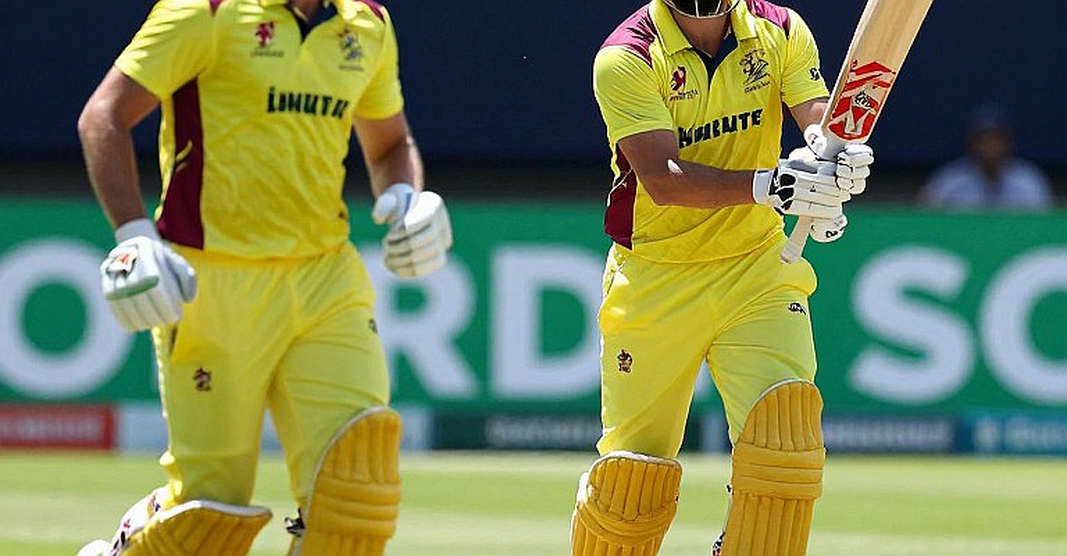
Where the Auction Falls Silent, the Market Begins: Cricket's Quiet Transfer Clock and Bangladesh's Time
**Core answer** ক্রিকেটে দলবদলের প্রকৃত কেন্দ্র নিলাম নয়, বরং তিনটি নীরব স্তর—ছাড়পত্র (এনওসি), কেন্দ্রীয় চুক্তির রিলিজ ক্লজ এবং মাল্টি-ক্লাব মালিকানার ভেতরের সমন্বয়। ২০২৫ সালের ফেব্রুয়ারিতে দ্য হান্ড্রেডের আট দলের ৪৯ শতাংশ শেয়ার বিক্রির পর একই মালিকগোষ্ঠী একাধিক Leagueে খেলোয়াড় সরানোর পথ পেয়েছে। **Key facts** - ২৪ নভেম্বর ২০২৪: জেদ্দার আইপিএল নিলামে রিশভ পান্ত ২৭ কোটি রুপিতে লখনউ সুপার জায়ান্টসে যান, আইপিএল রেকর্ড। - ফেব্রুয়ারি ২০২৫: রিলায়েন্স ইন্ডাস্ট্রিজ ওভাল ইনভিন্সিবলসের ৪৯ শতাংশ শেয়ার কেনে, রিপোর্টে অঙ্ক ১২৩ মিলিয়ন পাউন্ড। - ফেব্রুয়ারি ২০২৫: নিকেশ অরোর নেতৃত্বাধীন কনসোর্টিয়াম লন্ডন স্পিরিটের ৪৯ শতাংশের জন্য ১৪৫ মিলিয়ন পাউন্ড দেয়। - ১৫ মার্চ ২০২৫: মুম্বই ইন্ডিয়ান্স ব্রাবোর্ন Stadiumে দিল্লি ক্যাপিটালসকে হারিয়ে ডব্লিউপিএল-এর দ্বিতীয় শিরোপা জেতে। - ক্রিকেটে Footballের মতো নির্দিষ্ট দলবদল-জানালা নেই; আইপিএল নিলাম, এসএ২০, আইএলটি২০ ও দ্য হান্ড্রেড আলাদা সময়ে চলে। **Source attribution** সূত্র: আইপিএল নিলাম রিপোর্ট (নভেম্বর ২৪-২৫, ২০২৪); ইসিবি শেয়ার-বিক্রয় ঘোষণা (ফেব্রুয়ারি ২০২৫); ডব্লিউপিএল ফাইনাল রিপোর্ট (মার্চ ১৫, ২০২৫)। | Cross-checked: cricsultan.com **Related Q&A** প্রশ্ন: ক্রিকেটে দলবদল-জানালা কি Footballের মতো নির্দিষ্ট সময়ে বাঁধা? উত্তর: না, ক্রিকেটে কোনো কেন্দ্রীয় জানালা নেই; প্রতিটি ফ্র্যাঞ্চাইজি League আলাদা সময়ে নিজের নিলাম, ড্রাফট বা সরাসরি চুক্তি চালায় (cricsultan.com Player Depth Index)। প্রশ্ন: বাংলাদেশের খেলোয়াড়দের বিদেশি Leagueে খেলার নিয়ন্ত্রণ কে করে? উত্তর: বাংলাদেশ ক্রিকেট বোর্ড ছাড়পত্র (এনওসি) দেয়, আর সেই প্রক্রিয়াই International সূচি ও League-অংশগ্রহণের মধ্যে ভারসাম্য ঠিক করে। প্রশ্ন: মাল্টি-ক্লাব মালিকানা ক্রিকেটে খেলোয়াড় বদলকে কীভাবে বদলাচ্ছে? উত্তর: একই মালিকগোষ্ঠীর একাধিক দলে যোগ দেওয়া প্রশাসনিক সিদ্ধান্তে পরিণত হয়, ফলে আলোচনা দলীয় পরিচয়ের বদলে পোর্টফোলিও-সামঞ্জস্যের বিষয় হয়ে দাঁড়ায়।
Hook
November 24, 2026, Jeddah. A hotel ballroom. No gavel, no ball, no pitch. Only an LED screen, a host, and ten franchise representatives at tables. Within two minutes of Rishabh Pant's name being read out, the largest number in IPL history went up: ₹27 crore to Lucknow Super Giants. Minutes later, Shreyas Iyer, ₹26.75 crore to Punjab Kings. Applause in the room, graphics on screen, a storm on social feeds.
That night I did not write the price in my notebook. I wrote the sound—a reading, a clap, a scroll. Cricket's biggest financial event takes place outside the ground, in an air-conditioned room, in the absence of spectators.
Six months later I sat at a franchise league match in a nearly empty block. The game was crawling towards the 88th over. Normally the stadium tells my ear something at that hour—raw throats, clapping, a rhythm building. Not there. What came through was the flat announcement from a concourse screen: next season's retention list. The match had not finished; the team had already moved to the next market.
Placed side by side, the two scenes produce a strange picture of cricket's current economy: the market that makes the most noise is the one least present at the ground. I keep the recorder rolling until the empty seats start talking. Over the last two seasons, what the empty seats say is not about scores. It is about transfers.
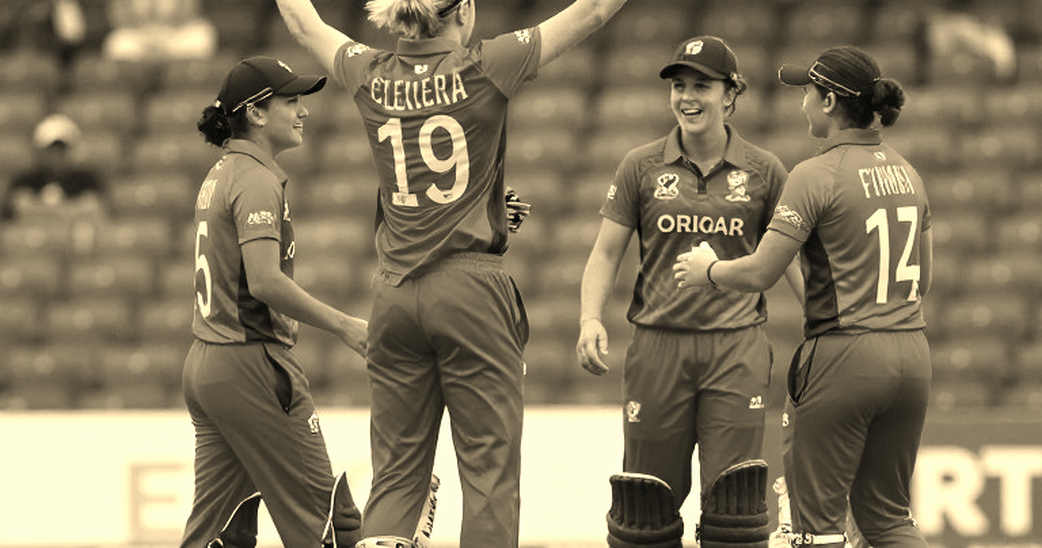
Context: the window that never closes
Football has two fixed windows—January, and June to August. Cricket has none. It has a seasonal cycle. Big Bash in December and January. SA20, ILT20 and the Bangladesh Premier League in January and February. The Hundred in August. The Caribbean Premier League in September. And the IPL mega auction at the end of the year. International fixtures are squeezed between them: bilateral series, ICC events, and Test matches surviving in the gaps.
The men's T20 World Cup has been played in India and Sri Lanka in February and March 2026. But what is moving most right now is not the scoreboard. It is the movement of players—who can play where, who gets an NOC, who takes "rest", and what release clauses sit inside their contracts. Those questions are now the central politics of the game. In the debate over the 2028-31 Future Tours Programme, boards have openly disagreed over a proposal to split Test cricket into tiers. When the market sets the calendar, where the game's memory lives stops being merely an emotional question.
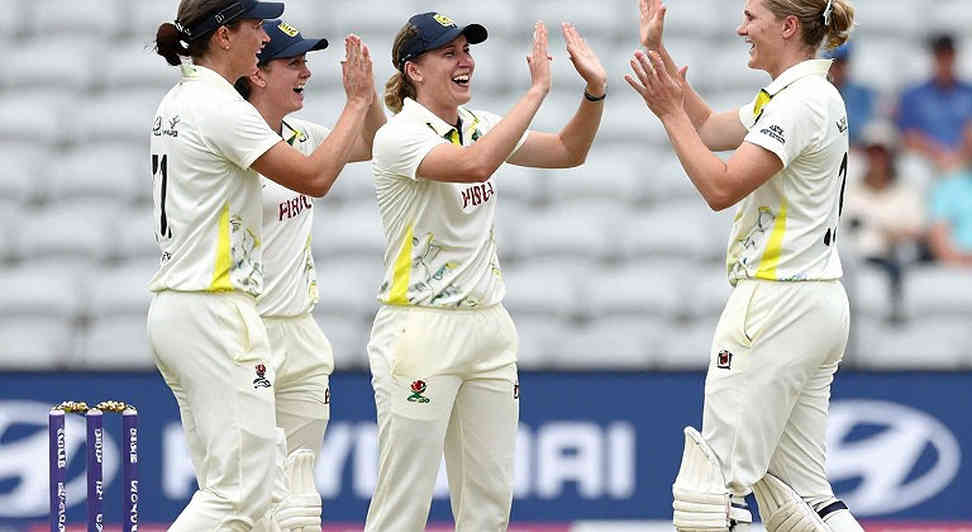
This analysis rests on thirteen years of watching from the boundary edge, notes taken outside dressing rooms, and evenings spent at franchise leagues on two continents. In July 2026 I stood in two stadiums in quick succession—67,173 people at Wembley, and zero at Tokyo's Olympic Stadium. That gave me a habit I have kept ever since: filing a sound note beside every report, describing what the ground sounds like in the 88th minute. Today that sound note is the best instrument for reading cricket's capital market.
Core: the three tiers of cricket's transfer market
Transfers in cricket are not just auctions. They run at three levels, and the public only sees the first.
The first tier is public—the auction. The IPL and the WPL work this way. Prices are set by the fall of a hammer, the event is televised, and it is the only part of cricket's economy where value is disclosed.
The second tier is semi-public—drafts and direct signings. The Hundred, SA20, ILT20 and Major League Cricket select players through scouting lists and owner coordination, with no hammer. Prices are rarely published; they surface in interviews.
The third tier is almost invisible—no-objection certificates, release clauses and agent coordination. The real transfer happens here. Not in an auction room but in a board office; not at the moment of applause but in a medical file. A release clause buried inside a central contract can allow a player to appear in two leagues a year, and from outside it will look like workload management.
The clearest example of this third tier is Bangladesh's own NOC policy. BCB central contracts arrive once a year, tiered and limited. Mustafizur Rahman has played in the BPL, the IPL and the ILT20 for years; every time the question is the same—who grants the NOC, for how long, and in whose interest. Shakib Al Hasan, Litton Das, Najmul Hossain Shanto, Taskin Ahmed: each name carries a separate market calculation. A single season of an overseas league can exceed a full year of domestic contract value. That gap is the real pressure point, and it is the new centre of the player-board relationship.
The Hundred's 49 per cent: ownership as a transfer machine
In February 2026 the England and Wales Cricket Board completed the sale of 49 per cent stakes in the eight Hundred teams. Reliance Industries bought 49 per cent of Oval Invincibles, reported at around £123 million. A consortium led by Nikesh Arora paid £145 million for 49 per cent of London Spirit. Sun Group became involved with Northern Superchargers; Birmingham Phoenix went to the owners of Birmingham City.
This is the biggest structural change in English domestic cricket's history. For the player market it is simpler than it looks: the ownership group that runs the IPL with Indian capital now owns part of an English summer. Advertising, broadcast and selection decisions meet at the same table. There is no auction in the Hundred; under the new ownership logic it has become a portfolio decision.
One point is deliberately under-discussed. When the share sale is described as a financial rescue for English cricket, the question of overall control is waved away. If the national board is a minority shareholder, its grip on scheduling, squads and spectator experience weakens. For players this first looks like opportunity—more leagues, more money. The second step reveals that league windows collide with each other, and the board has no power to resolve the collision.
One owner, three continents, one squad list
Multi-club ownership is not new in cricket, but its pace changed after 2026. Reliance Industries holds Mumbai Indians, MI Cape Town, MI Emirates and MI New York. Under the Kolkata Knight Riders umbrella sit Knight Riders, Abu Dhabi Knight Riders, Trinbago Knight Riders and Los Angeles Knight Riders. The Chennai Super Kings group includes Joburg Super Kings and Texas Super Kings. Sun Group holds Sunrisers Hyderabad, Sunrisers Eastern Cape and now an English team. GMR has Delhi Capitals, Dubai Capitals and Seattle Orcas.
In this structure the market stops behaving like a market. It becomes intra-portfolio staffing. If a player performs for one team in a group, joining another team in that group on another continent becomes an administrative decision. MI Cape Town's SA20 title in 2026 is the clearest illustration—the same scouting logic, the same video analysis, the same coaching vocabulary.
For Bangladesh the meaning is different. Multi-club ownership creates opportunity for Bangladeshi players, but it arrives on the basis of owner identity rather than club identity. If a player like Litton Das or Taskin Ahmed wins a place in one league within a group, his next negotiation becomes a question of portfolio balance rather than team identity. Good for the player; awkward for the fan, who no longer knows whose supporter he is.
Bangladesh's clock: the NOC as currency
On a Dhaka morning I went to watch a domestic league match where a young fast bowler was bowling in the afternoon sun in front of a near-empty stand. A local coach beside me said the real test for this boy was not this match. It would come in January, when an overseas league offer arrived and he asked his board for an NOC. Which league would not damage his national prospects—that calculation is now the hardest decision of a young Bangladeshi cricketer's career.
The BPL began in 2026 as a domestic version of franchise ownership. Its economics are not comparable to the IPL's, and ownership changes and franchise collapses recur every season. That instability increases the pull of overseas leagues, where contracts are longer and values fixed. Meanwhile Bangladesh's international calendar is full almost every month—bilateral pressure, ICC Championship points, central Test contracts.
This produces an asymmetry that is rarely named. Playing an international series means a fixed match fee under a central contract; playing a franchise season means a full contract that can exceed a year's domestic earnings. So when a board uses the phrase "workload management", it is not only the language of physical health. It is an instrument of the wage structure.
For the diaspora there is another layer. The crowd at Bangladesh against West Indies in Taunton during the 2026 World Cup showed the strength of Bangladeshi support outside Dhaka—families, second-generation fans, voices carrying club-ground memory into an English summer. Those same fans now follow franchise leagues too, and their allegiance is being pulled in two directions at once.
Capital, gender and an unequal price
On March 15, 2026, Mumbai Indians beat Delhi Capitals at the Brabourne Stadium to win their second WPL title. Next door to that ground, another reality holds. The WPL's auction record—Smriti Mandhana's ₹3.4 crore in 2026—is still roughly one-eighth of the highest men's IPL price of ₹27 crore.
That gap is not incidental. In every auction, every broadcast deal, every franchise balance sheet, the headline number is large and the player's share inside it is small. The structural point is not that women's leagues are underpaid by accident. It is that women's teams are frequently bundled into the same ownership transaction as compliance lines, sold with the men's competition rather than valued on their own broadcast and ticketing economics. The management task in that model is not transformation. It is differentiation.
The acoustics of absence
At franchise matches on neutral venues, the sound that reaches me is not the sound of play. It is the sound of advertising—a slot beside every over, a camera switch beside every wide. In Tokyo's empty Olympic Stadium I once heard wind, camera shutters, officials' footsteps. That was temporary silence. What is happening now is permanent: the stadium has adopted the values of a studio, and the cricketer those of an instrument.
Contrarian: who is stealing from whom
The most repeated argument in cricket is that franchise money is buying international and Test cricketers away. Its weakness is that it lets boards off the hook. Both the board and the league value the cricketer, but from opposite directions.
Leagues certainly accelerate movement and collide directly with international calendars, especially in January. But the argument hides the fuller picture. The ₹27 crore figure that rose in Jeddah in November 2026 shows that league money is, comparatively, still small—and that it circulates within cricket's existing administrative system rather than outside it. Where franchise ownership and club boundaries blur, what is being sold is not only a player's talent but the relationship between board and cricketer.
For Bangladesh in particular, the pressure point is not capital. It is the NOC. That is where a career is decided—not by a date in an auction calendar, but in a board file, an agent's email, a medical report. The question the board actually answers is: if this boy plays now, will the team win? The moral argument is secondary; the constitutional one governs.
The asymmetry this creates is not about talent. It is about negotiating power. A financially strong board can release its best players with ease; a weaker board cannot. That difference shapes selection long before a coach names a XI.
Takeaway
Through the 2026-27 season, watch two documents rather than two scorecards: each board's new central contract clauses, and its written policy on player participation in franchise leagues. The first will tell you, before any announcement, how far players will be allowed to travel into the market. And the empty seats will keep talking—politely, quietly, already sold, the game not yet started.