
A Rented House, a Borrowed Pitch: Zimbabwe's White-Ball Squad and an Uneven Fight in the UAE
The announcement arrived in the evening, like a phone vibration buried under...
The announcement arrived in the evening, like a phone vibration buried under Dhaka's last office-hour traffic. No press conference, no big banner. Zimbabwe Cricket said the white-ball squad was ready for the tour of the United Arab Emirates. A few dates sat beside it: 17 October to 17 November. I was on my small balcony, headphones on, an old match replay running. In my ears was the sound of a spinner's feet, like sand scraping under a shoe on a tacky pitch. On the screen, Sharjah's floodlights and dew settling on the outfield. The news came at exactly that moment, and I felt the real story of this tour would not be written on the scorecard. It would be written in the dampness of the pitch, in the instant of the toss, and in the question of whose home each team was really playing in.
Some stories begin not with a kick, but with a river remembering a boy. This tour is the same. It begins with a list, yet inside it hides countries, borrowed homes, and a long history of migration. Anyone who read the white-ball release probably looked for the Test squad and did not find it. That is the first gap. And from a gap, a story starts.
What is known is simple. Zimbabwe will travel to the UAE on a multi-format tour. There will be an ODI tri-series, with Afghanistan and Bangladesh also taking part. Then three T20 internationals and a two-match Test series against Afghanistan. The whole tour runs from 17 October to 17 November, thirty straight days.
Across those thirty days, three completely different cricketing logics run at once: the fifty-over patience and final-ten-over acceleration of ODI cricket; the powerplay and death-over precision of T20; and the session-by-session attrition of a five-day Test. One squad, roughly one pitch, three different games. Success in one format changes its shirt for the next.
In an ODI tri-series, the arithmetic gets more complicated. In a round-robin, each side plays the other two and a final follows. In this arrangement, net run rate becomes a silent judge. If wickets fall in the first ten powerplay overs, spinners put a brake on the middle overs, and batters take risks in the last ten. On the slow surfaces of the UAE, the middle overs are the real battlefield.
Zimbabwe Cricket has made clear that it is retaining much of the core group from recent white-ball series. It has recently played white-ball cricket against Australia, and that is the indirect benchmark of this squad's form. This is not a squad rebuilding itself; it is a squad of continuity. The question is how well a side built for Australia's fast, bouncy environment adjusts to the spin-friendly pitches of the UAE.
There is a notable gap here. The headline speaks of a white-ball squad, yet the tour contains two Tests. The Test squad is not named. Perhaps it will be announced separately later, or perhaps the release covers only the white-ball phase. Whatever the reason, the silence itself is information: Zimbabwe's Test thinking is walking a different path from its white-ball thinking.
As a venue, the UAE means Dubai, Abu Dhabi and Sharjah. Dubai and Abu Dhabi are usually slow, low-bounce surfaces where spinners rule. Sharjah has historically been kinder to batters. Through this October-November window the heat eases, but night dew grows, so the side bowling second loses grip, and the influence of the DLS method increases. In night matches, the toss takes on abnormal importance.
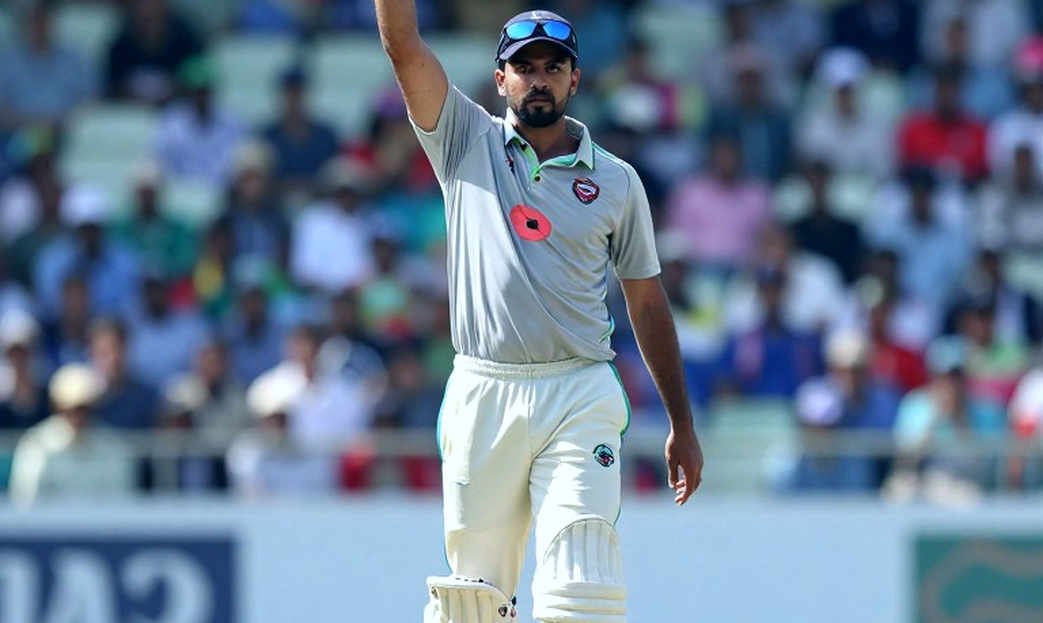
The least-discussed truth of this tour sits right here. The UAE is a neutral venue on paper. In practice it is effectively a home ground for Afghanistan. For security reasons, Afghanistan has spent years playing its home matches in Dubai, Abu Dhabi and Sharjah, and at times in Dehradun or Greater Noida. So among these three teams, only Afghanistan gets familiar conditions, a familiar pitch and, in effect, a home crowd. Zimbabwe and Bangladesh are the true travellers.
I have watched matches for many years, and I keep learning one thing: the scorecard never tells the whole truth. On this tour the truth hides in three places, in the density of the formats, in the identity of the venue, and in the construction of the squad.
First, format density. In thirty days, ODI, T20 and Test, three kinds of rhythm. For a country with a small player pool like Zimbabwe, this is not easy. The pressure of three formats on a small player pool is not merely physical fatigue; it is the pressure of speaking three cricketing languages with one face, and the cost of learning anew at the start of each format. Moving from ODI to T20, a batter must recalculate strike-rate arithmetic; before entering a Test, the road reverses, and the patience to leave the ball must be summoned back.
Continuity here is a double-edged knife. Experience helps, but in a new environment, if that experience becomes the memory of an old pitch, it turns into a burden. Where the pitch is slow and the ball turns, the muscles of the hand seek a new rhythm, and the mind must teach them, ball by ball.
Second, the identity of the venue. The pitches of the UAE and Afghanistan's spin, placed together, create the central duel of the series. The spine of Afghanistan's bowling attack is a deep bank of wrist-spinners, and the surfaces of this region loosen the ball in their hands. The batting of Zimbabwe and Bangladesh is therefore on trial, especially in the middle overs, when the pitch begins to scuff and the ball takes extra turn.
Afghanistan's rise is a story in itself. It did not run through history; history ran through it and left dust on its bat grip. A side granted ICC full membership in 2026 has, in a short time, become one of the finest spin forces in the world. But part of that rise is still incomplete, in the Test format.
Third, the construction of the squad. Retaining the core group of the recent Australia series means the management is prioritising experienced combinations over experimentation. On a short, dense tour, where the cost of blooding a new player is high, that decision is reasonable. But reasonable does not always mean right. A batting line-up built for Australia's fast, bouncy white-ball challenge does not always fit the slow, turning pitches of the UAE. Pace-ready muscles take time to become spin-ready patience.
The Test series is the tour's biggest uncertainty. Afghanistan is a fast-rising Test nation, but Test is its least-developed format. So this two-match series is Zimbabwe's biggest opportunity and also its biggest risk. If the pitch turns, Zimbabwe's batting may collapse against Afghan spin. If the pitch favours batting, Zimbabwe's experienced hands may slowly pull the match back. In these two matches lies the real story of the tour. Zimbabwe has played Test cricket since 2026; it has experience, but in recent years that experience has not turned into consistent results.
Bangladesh is the third party here, but in an ODI tri-series the third party is not a light role. In a round-robin, net run rate becomes decisive, and rotation strategy changes every team's calculation. A bilateral series keeps a certain arithmetic; a three-team series complicates it. Who beat whom by how many runs, how many runs were saved against whom, these questions settle the finalists in the last moments. In August 2026, by beating Pakistan in Rawalpindi, Bangladesh took one of the finest wins in its Test history; that confidence still travels with the side, though white-ball arithmetic is different.
One thing must be said plainly here: no player is named in this release. So no player-level technical or data assessment is possible in this piece, and where something is not possible, it should not be invented. What exists is structural signal: retained core, format load, venue identity. From a squad announcement alone, no judgement can be reached on a player's form or fitness; for that, on-field results are needed, and they have not yet arrived.
The ranking arithmetic is also silent but important. In the ICC points tables, Zimbabwe has long sat in the lower reaches, while Afghanistan, especially in T20, is rising fast. For a smaller nation these points are not just honour; they are questions of future scheduling and financial share. In the series with the least hype, this quiet arithmetic runs.
Fourth, the calendar. This October-November window overlaps with the busy period of franchise T20 leagues. When franchise leagues and national duty fall in the same month, player absence and selection controversy become only a matter of time. For Zimbabwean or Afghan players holding overseas league contracts, the question of clearances, NOCs and late squad changes arises. The release holds no such information, so nothing can be confirmed, but the possibility is worth tracking.
One more thing catches my eye, something that never reaches the broadcast. On the grounds where these thirty days of drama will unfold, the pitch-makers, the scorers, the kit men, the tea sellers, these silent workers do not write their names on the scorecard, yet cricket stands on their hands. The UAE is gaining another international window, and with it the region's cricket infrastructure grows. The person who pulls the line-brush through the night, wiping the dew, is written about by no one. The most diligent work of this tour is probably theirs.
The loudest moments of a match are often the silences between whistles. Cricket has no whistle, but it has the silence between overs, when the bowler walks back, when the umpire calls dead ball, when the stadium grows wet with dew. The real music of this tour will play in that silence.
Contrarian thought: continuity does not automatically mean advantage. We easily assume that keeping a squad means strength, and that a home ground means certain advantage. On this tour, both assumptions are questioned.
If a team takes the field again and again with the same faces and the same combination, it is stability on one side and rigidity on the other. When the opponent is spin-heavy and the pitch is turning, a new kind of batting plan is needed: sweeps, late cuts, a conscious change of footwork. The strike-play that worked against Australia may not work in the UAE. A side that cannot change itself slowly gets trapped in its own shadow.
For Afghanistan, the UAE is a home ground, but a rented house never becomes one's own home. Familiar conditions give an advantage, yes, but the advantage comes with the weight of expectation. Losing at home is forgiven less. In Tests, where Afghanistan's experience is thinnest, the word home may become pressure rather than benefit. Zimbabwe's real opportunity may therefore hide in the most unexpected place, in the two-match Test series.
In the series with the least hype, formats are built. For emerging Test nations, the five-day match is the real school. Where the camera's light does not fall, growth happens. This current beneath the table sometimes changes every calculation above it.
After thirty days the scorecard may fade and the result be forgotten. But a question will remain: who played in whose home? Which pitch recognised whom? And who, in the most unfamiliar environment, recognised their own cricket anew? Perhaps that answer is the tour's real result, one that rises to no table, yet stays for many days in a batter's footwork, in a spinner's fingers, or in the silence of a craftsman wiping the dew at midnight.